
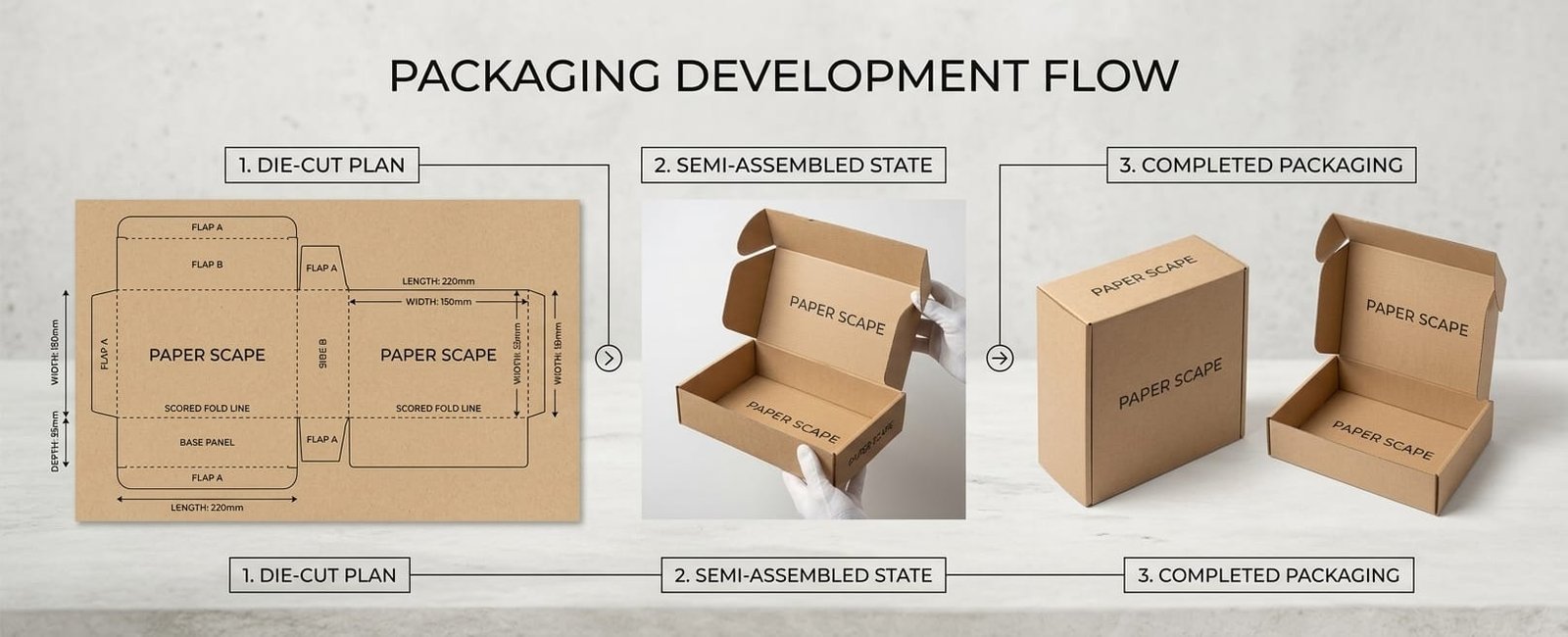
Structural Packaging Design for Custom Paper Packaging
Structural packaging design develops the shape, dimensions, opening method, internal fit and material direction of a paper or paperboard package. It connects the product requirements with the visual design and production process.
For brands and business buyers, the structure should protect the product, support a clear brand presentation and remain practical for sampling, assembly, storage and transport. PAPER SCAPE GROUP supports structural packaging projects for custom gift boxes and paper packaging, from format selection and product-fit review to prototype sampling and production preparation.
What Does Structural Packaging Design Include?
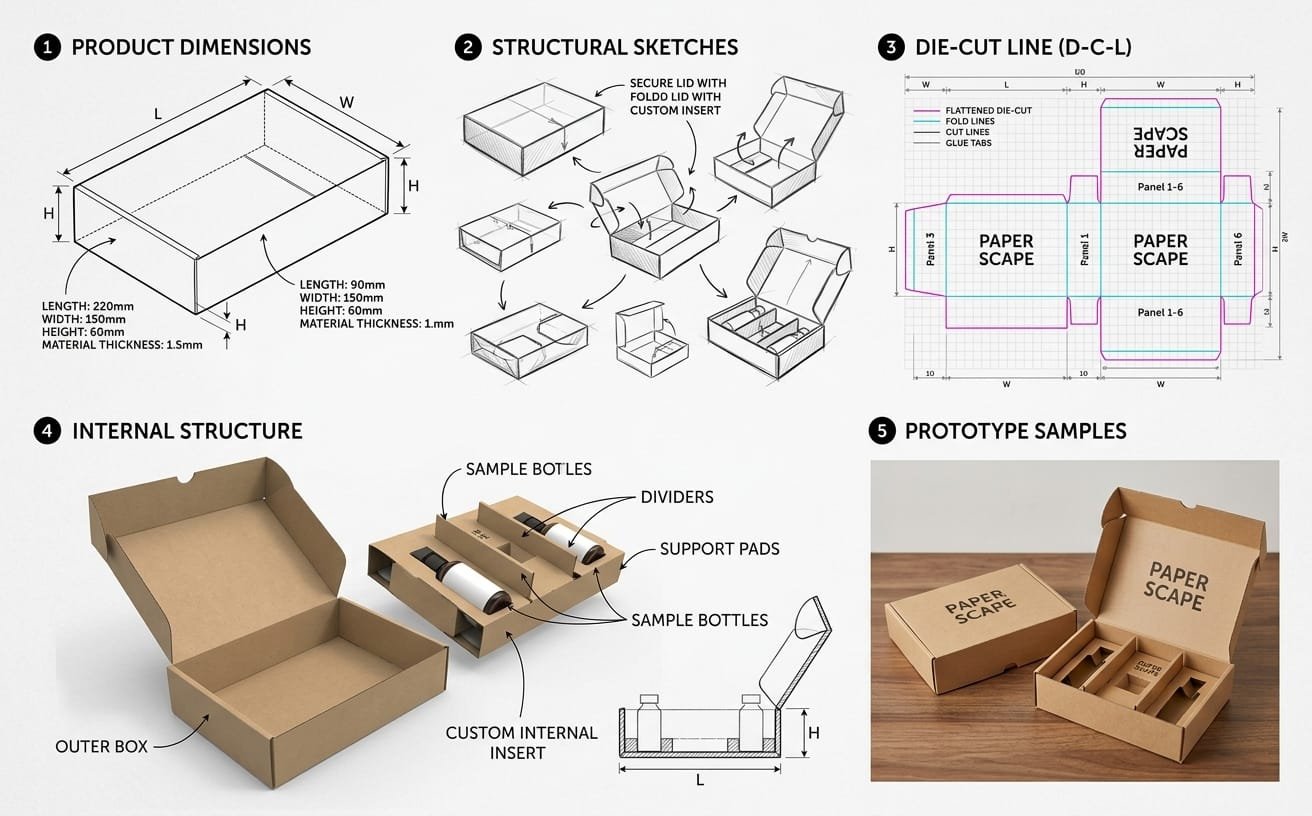
Depending on the product and packaging format, a structural packaging project may include:
- Reviewing product dimensions, weight, shape and protection requirements
- Selecting a suitable box or packaging format
- Developing external dimensions and internal layout
- Checking product fit, inserts, trays, compartments and clearance
- Considering folding, closing and assembly methods
- Reviewing paperboard or corrugated material options
- Coordinating structure with printing and surface finishing
- Preparing prototype samples
- Reviewing artwork and production specifications before production
Structural design should be considered together with graphic design. A package may look attractive in a layout file but still need changes if it is difficult to fold, assemble, store, transport or open.
How Does the Structural Packaging Design Process Work?
1. Confirm the Product and Packaging Requirements
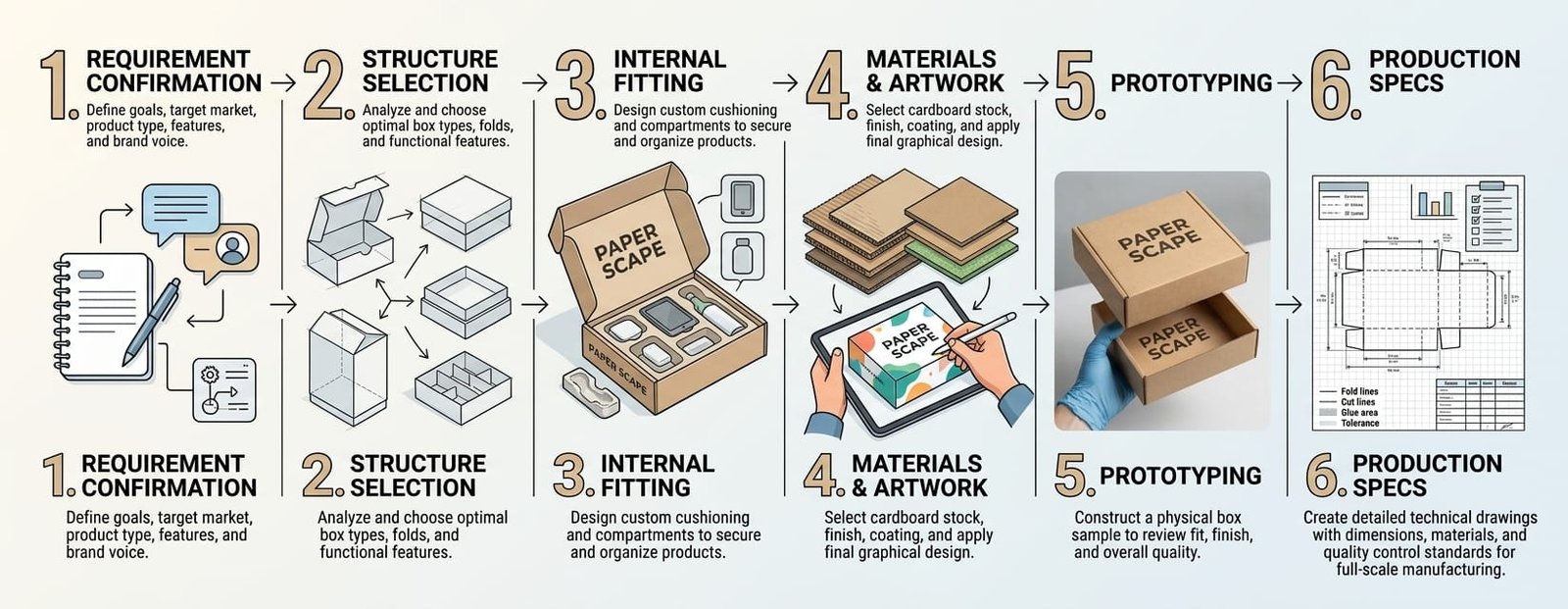
The first step is to understand what the package must do. Buyers can provide the product length, width, height and weight, together with photos, drawings or a physical sample when available.
The project discussion may also cover the packaging purpose, expected quantity, target market, delivery destination and known handling or protection requirements. If some information is not available yet, the discussion can begin with the confirmed product details and packaging objectives.
2. Select a Suitable Packaging Format
Different packaging formats create different requirements for protection, presentation, storage and assembly. Common formats include:
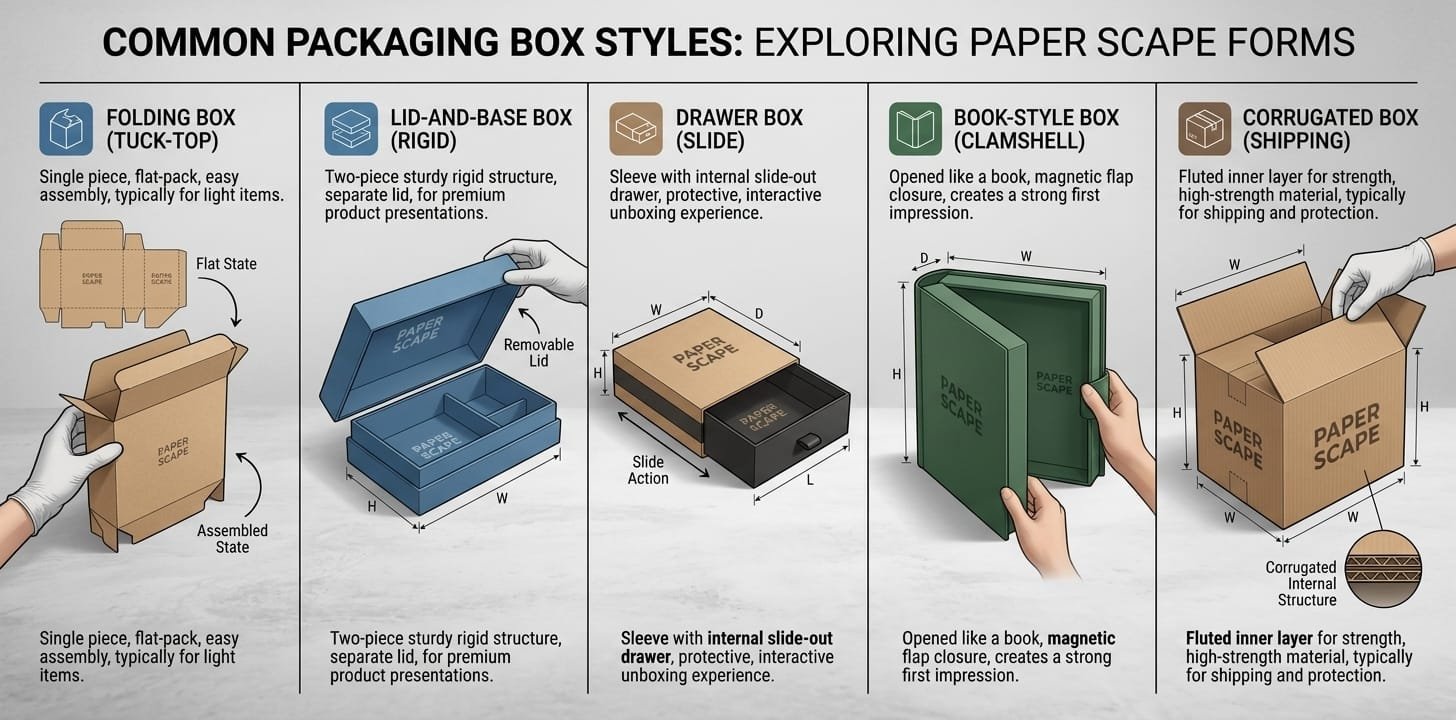
The right format depends on the product rather than appearance alone. Product size, required protection, opening experience, storage space, shipping conditions and production requirements should all be considered before confirming the structure.
| Packaging format | Main structural considerations |
|---|---|
| Folding box | Flat storage, folding sequence, locking tabs and efficient shipping |
| Lid-and-base box | Separate lid and base, product clearance and presentation when opened |
| Drawer box | Sliding movement, pull tab or ribbon, inner tray and friction control |
| Book-style box | Hinge area, cover opening, interior layout and closure method |
| Corrugated box | Board strength, dimensions, stacking and product protection |
3. Develop the Structure and Internal Fit
A structural design needs enough information to define the package dimensions. The internal space should hold the product securely without unnecessary movement, while also allowing for inserts, wrapping, protective materials or accessories when required.
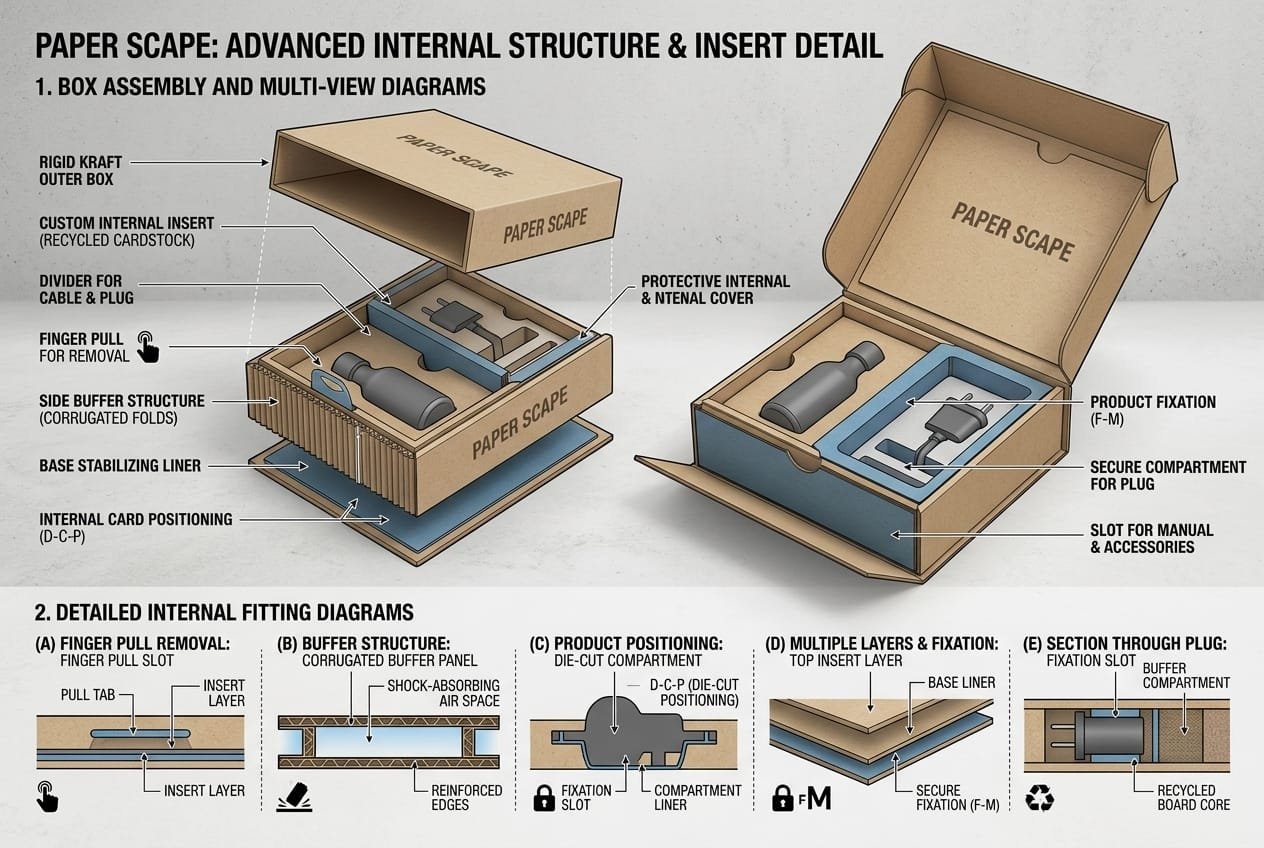
The review may consider:
- Final product dimensions inside the package
- Inserts, dividers, trays or protective elements
- Clearance for lids, drawers, hinges or closures
- Manual or repeatable assembly requirements
- Protection for corners, surfaces or fragile components
- External dimensions for storage and shipping
Confirming the product fit before final artwork can reduce the risk of changing the graphics after the structure has been revised.
4. Choose Materials and Coordinate the Artwork
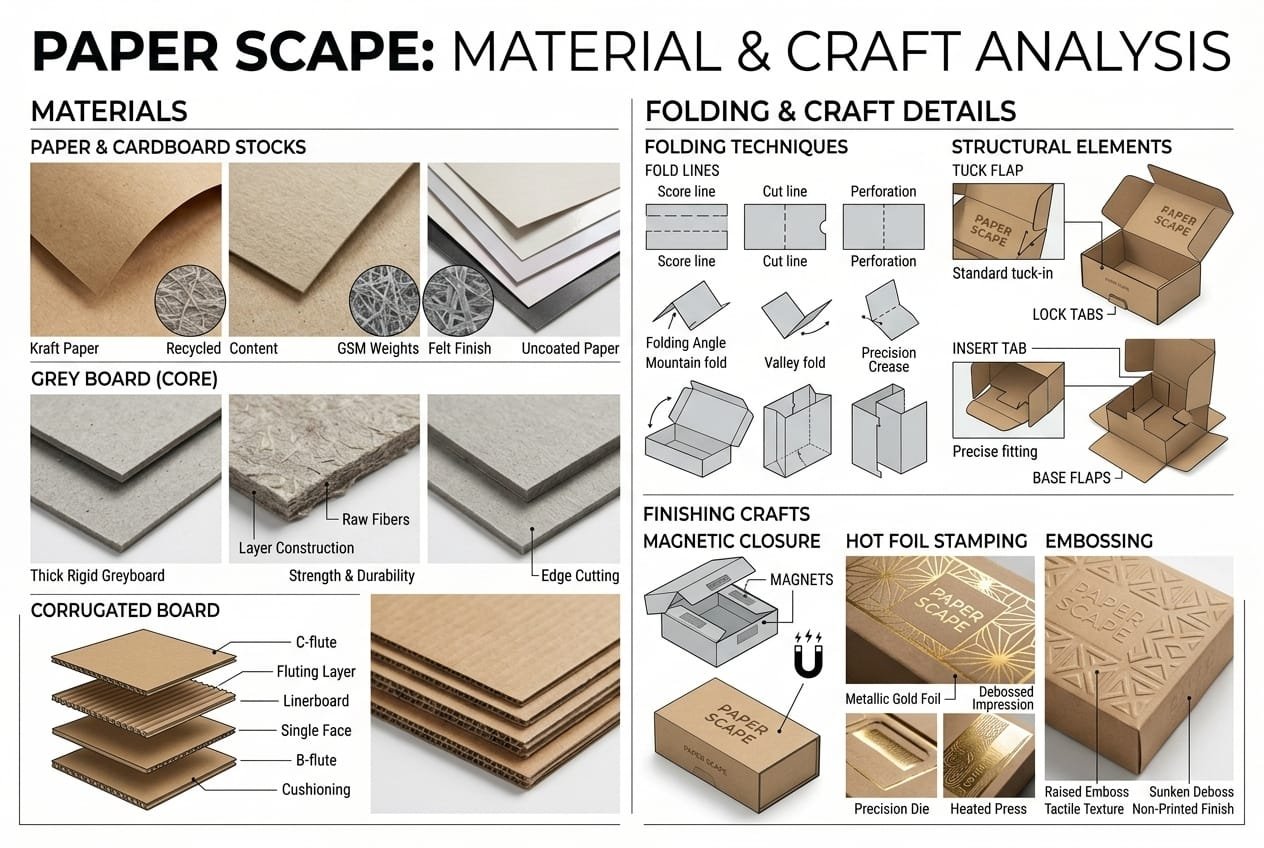
Paperboard and corrugated materials behave differently during folding, forming, stacking and transport. Material selection should consider the package format, product weight, required strength, surface appearance, finishing and expected handling conditions.
The material discussion may include paperboard thickness, corrugated board, flute direction, folding and creasing requirements, printability, surface finish and insert compatibility.
The artwork should be reviewed with the dieline and structural zones in mind. This may include logo placement, front and side panels, interior panels, fold lines, cut lines, safe areas, barcode placement, printing and surface finishing.
Any barcode or product information should be supplied or approved by the responsible brand or retailer before production.
5. Prepare and Review a Prototype Sample
A prototype sample allows the buyer to review the physical package before production. The review should cover more than the appearance of the sample.
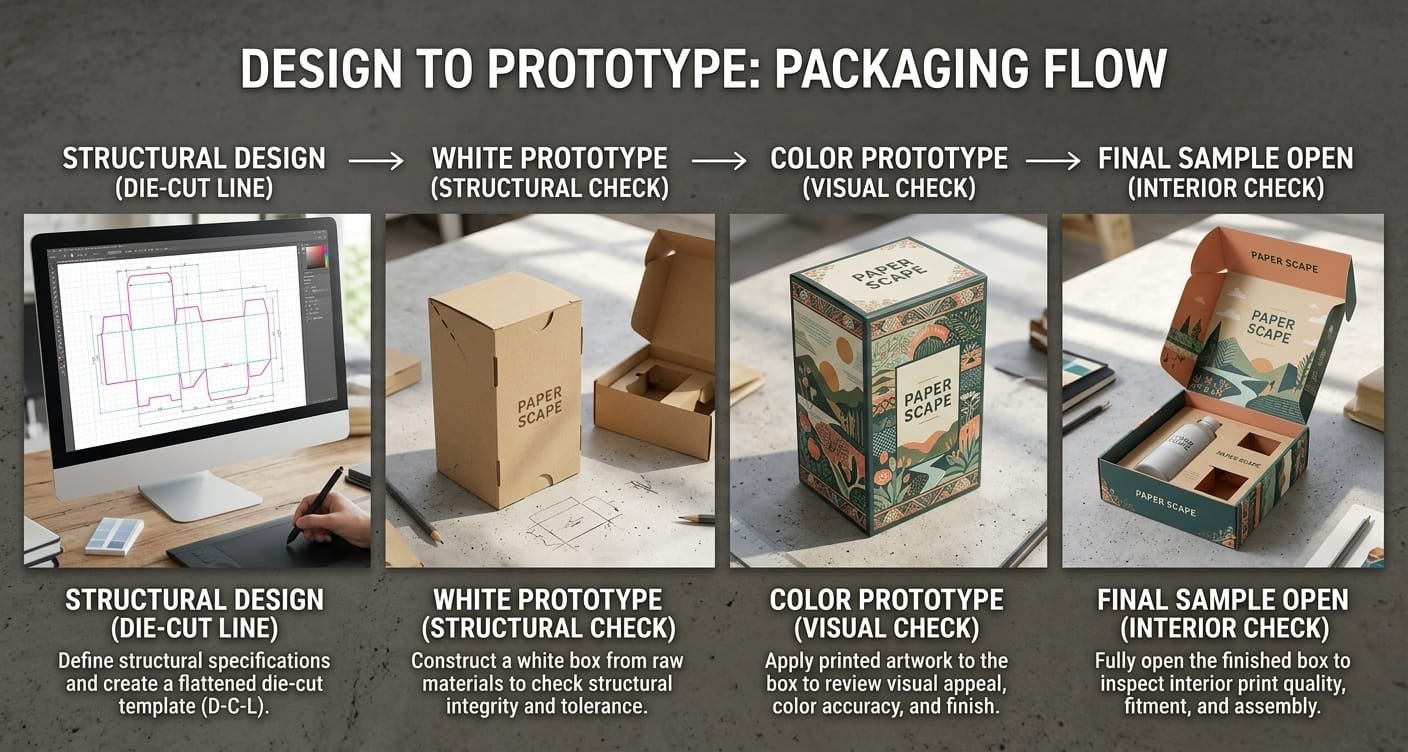
A prototype can help check:
- Overall dimensions and product fit
- Folding sequence and assembly method
- Lid, drawer, hinge or closure performance
- Insert position and product stability
- Artwork placement and panel alignment
- Material appearance and surface finish
- Opening experience and practical handling
If the sample reveals a structural issue, it is better to revise the design before final production specifications are confirmed. The number of sample rounds depends on the structure and the changes identified during review.
6. Confirm the Production Specification
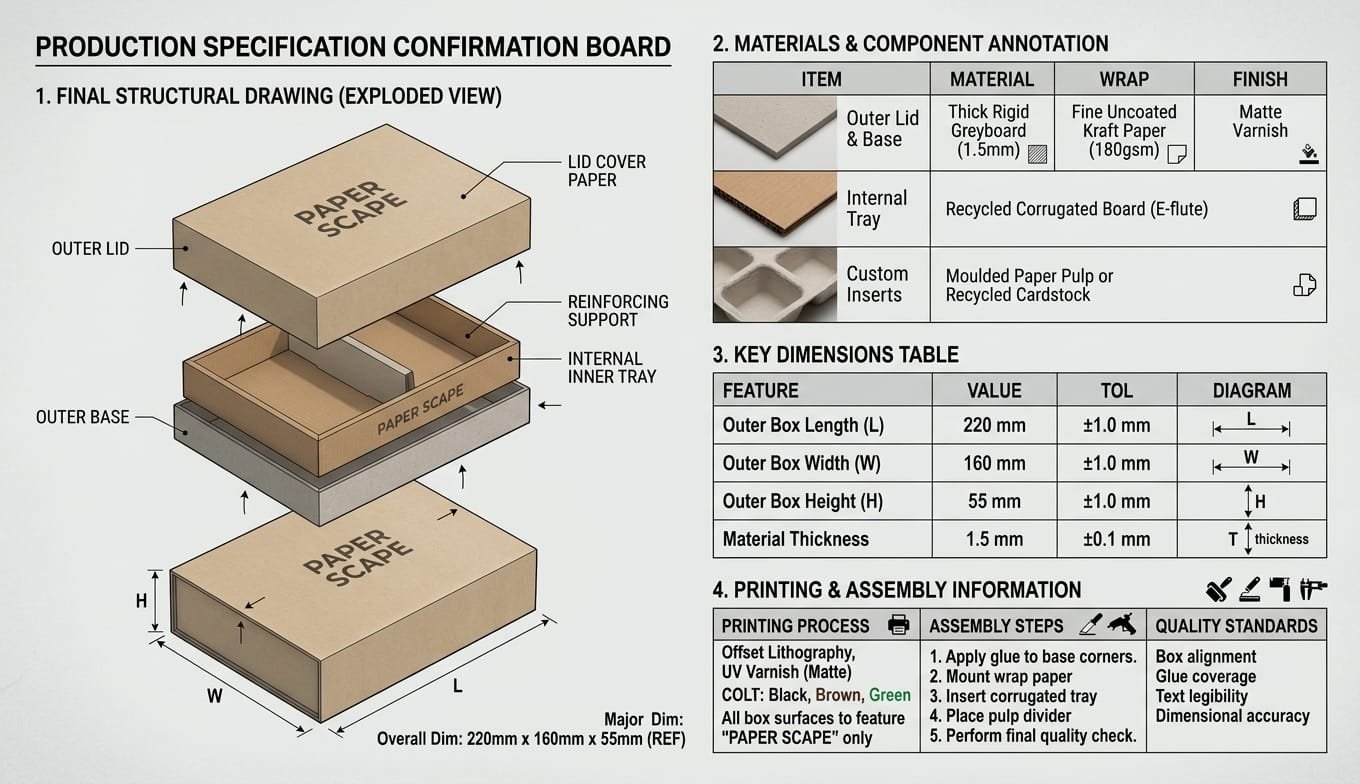
After the structure and prototype are reviewed, the approved production information can be organized. The final specification should identify the structure, dimensions, materials, artwork, printing, finishing, quantity, packing requirements and delivery details.
A complete specification helps the production team understand how the package should be made, assembled, checked and delivered. It also gives the buyer a clearer basis for discussing production requirements.
What Information Should Buyers Prepare?
To make the first structural packaging discussion more efficient, buyers can prepare:
- Product length, width, height and weight
- Product photos, drawings or physical samples
- Fragile areas or protection concerns
- Expected quantity
- Preferred packaging format or reference images
- Logo and artwork files
- Preferred paperboard, corrugated material or surface finish
- Insert, divider or accessory requirements
- Target market, delivery destination and timing requirements
Reference images are useful for communicating the desired direction, but they do not replace product dimensions or a structure review. The final recommendation should be based on the actual product and project requirements.
Frequently Asked Questions About Structural Packaging Design
What is the difference between structural packaging design and graphic packaging design?
Structural packaging design defines the package shape, dimensions, folds, openings, closures, inserts and material behavior. Graphic packaging design focuses on logos, colors, typography, illustrations and product information. A successful package coordinates both areas.
Can structural packaging be developed from product photos?
Photos can help begin the discussion, but accurate dimensions, drawings or a physical product sample are more useful for confirming product fit and package dimensions. The available information determines how precisely the structure can be evaluated.
Which box format is best for a premium product?
There is no single best format for every premium product. A lid-and-base box, drawer box or book-style box may create a different presentation and opening experience, while a folding or corrugated box may offer different storage, shipping or protection advantages.
Is a prototype sample necessary?
A prototype is useful when the buyer needs to verify product fit, dimensions, opening method, insert position, artwork placement, materials or finishing before production. Additional sample rounds depend on the structure and the changes identified during review.
How do materials affect structural packaging design?
Material thickness, stiffness, folding behavior, surface and strength can affect the dimensions, creases, closures, stacking and product protection of a package. Material selection should therefore be discussed together with the box format and production method.
Can structural packaging design support mass production?
Yes. Structural design can be organized around repeatable dimensions, materials, assembly and quality requirements. Production preparation depends on the approved prototype, artwork, materials, quantity, finishing and delivery specification.
Discuss Your Structural Packaging Project
Share your product details, packaging requirements and reference materials. PAPER SCAPE GROUP can discuss a suitable packaging structure, format, material direction and prototype requirements for your project.