
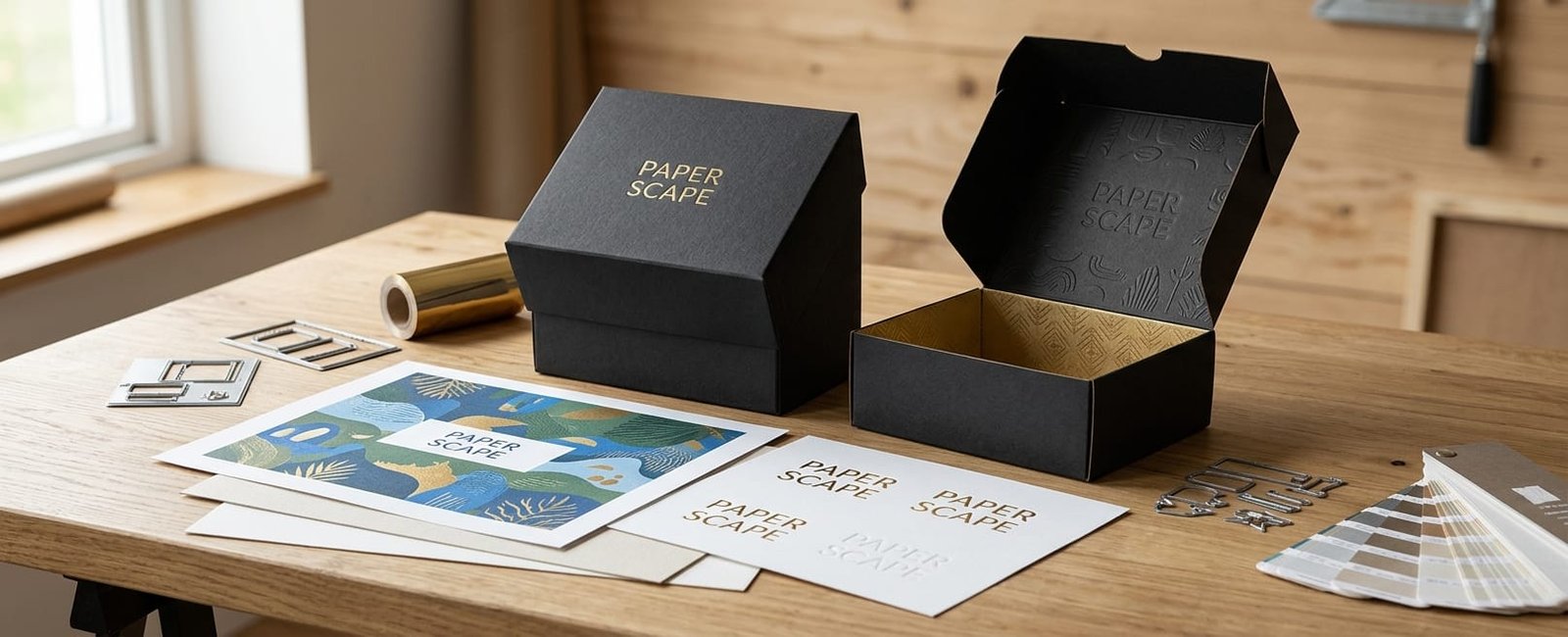
Printing and Finishing for Custom Paper Packaging
Printing and finishing turn a packaging design into a physical paper or paperboard product. Printing applies the brand artwork, colors and product information, while finishing adds the surface appearance, texture or functional details required by the packaging project.
For custom gift boxes and paper packaging, printing and finishing should be planned together with the packaging structure, material and final use. PAPER SCAPE GROUP supports printing and finishing discussions for packaging projects, helping buyers review artwork, materials, printing direction and finishing requirements before production.
What Do Printing and Finishing Services Include?
- Artwork and color direction review
- Printing method selection
- Paperboard or corrugated material compatibility
- Logo, text, image and product information placement
- Interior and exterior panel printing
- Surface appearance and finishing selection
- Barcode and required product information review
- Prototype or pre-production sample checking
- Final artwork and production specification confirmation
Depending on the packaging format and project requirements, the printing and finishing discussion may include:
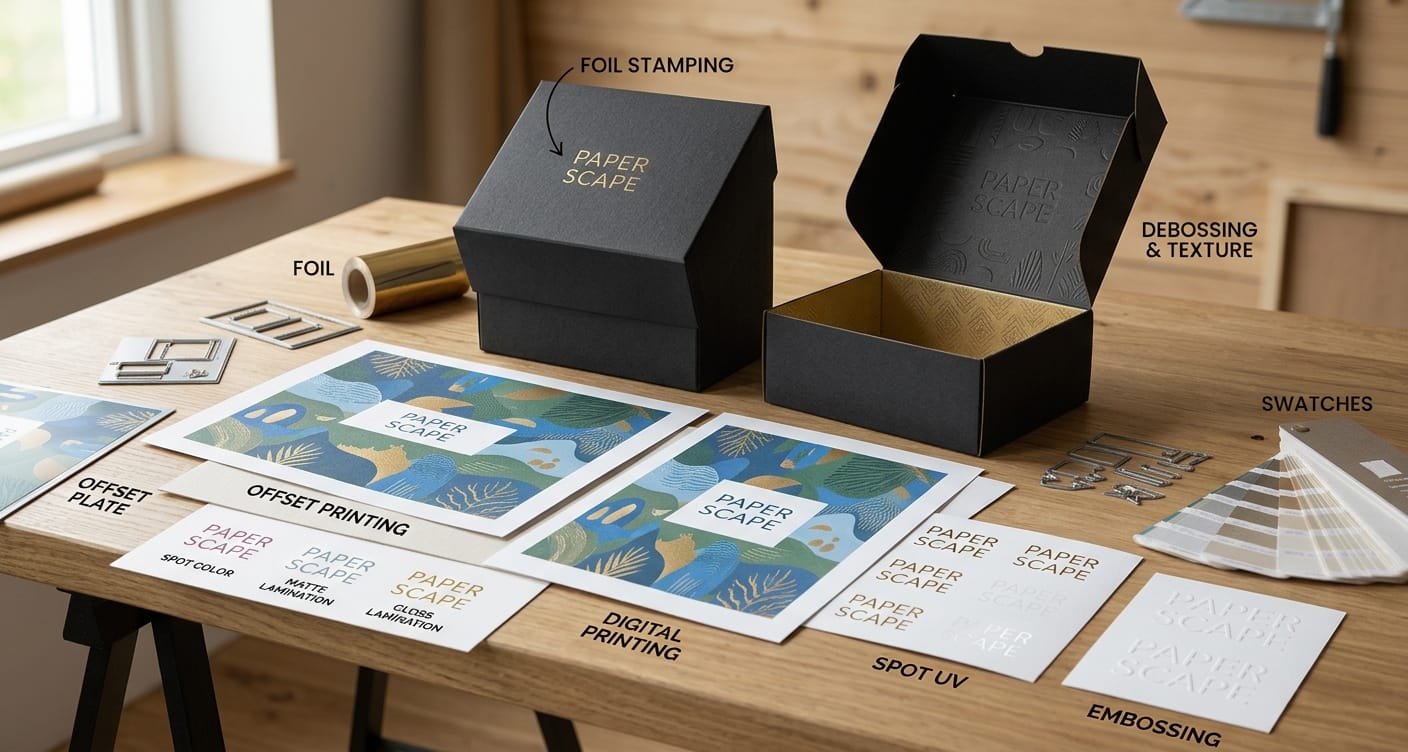
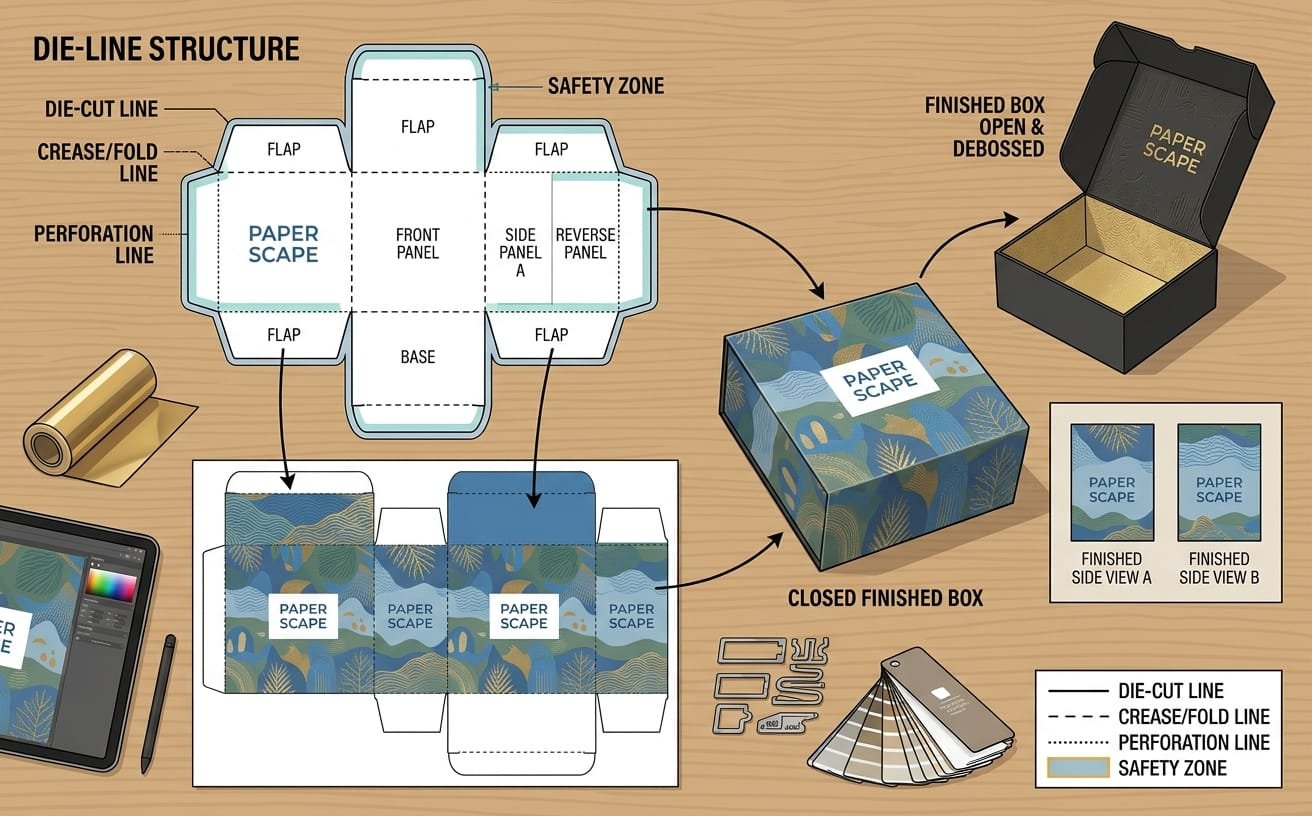
Printing and finishing are not separate from the package structure. Fold lines, cut lines, glue areas, windows and closures can all affect the placement and appearance of the artwork.
How Does the Printing and Finishing Process Work?
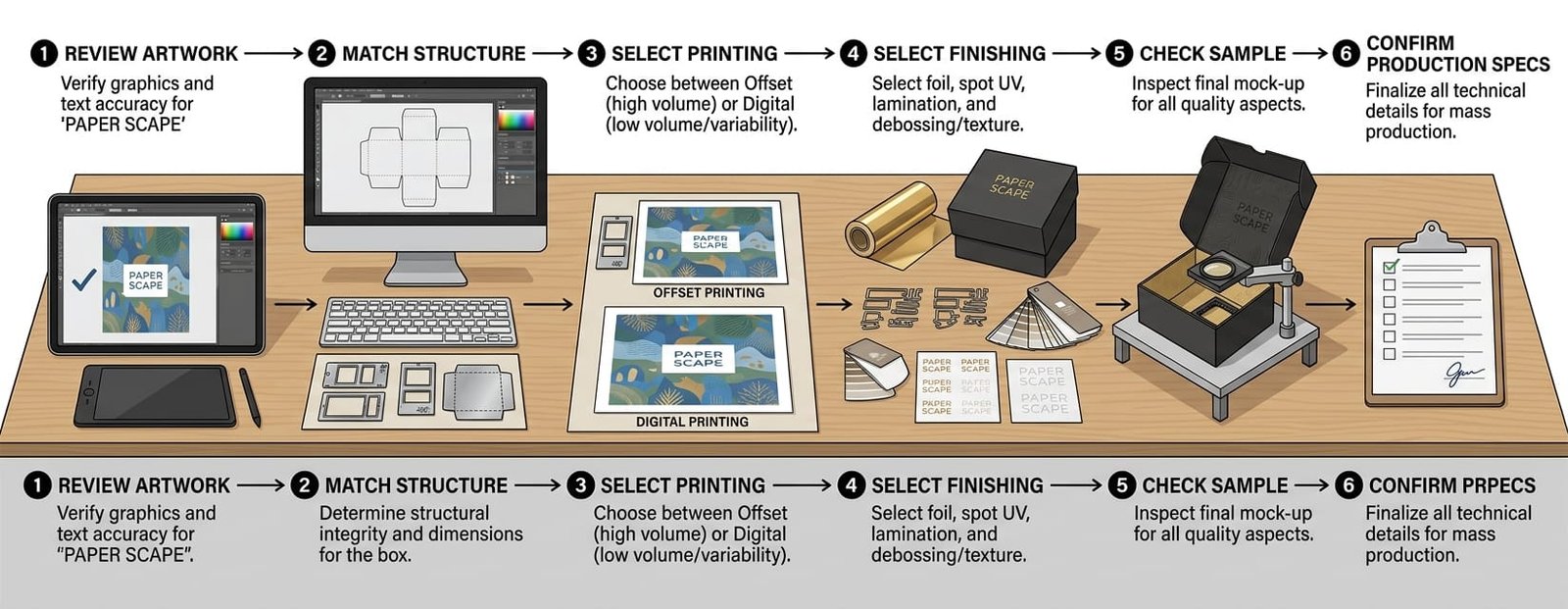
1. Review the Artwork and Packaging Requirements
The process begins with the packaging structure, artwork files and project objectives. Buyers can provide logo files, design layouts, reference images, product information and any preferred colors or finishes.
The discussion should also cover the packaging format, product purpose, target market, expected quantity and delivery requirements. These details help determine how the artwork and finish should be prepared for the package.
2. Match the Artwork with the Packaging Structure
Artwork should be reviewed against the dieline and structural layout before printing. The review may include the front, side, back and interior panels, as well as folds, cut lines, glue areas, windows and closures.
This step helps identify potential issues such as artwork crossing a fold, text being placed too close to a cut line, a logo becoming misaligned on connected panels or important information being hidden inside a glue area.
A structural packaging page can explain the box format and product fit, while the printing and finishing review focuses on how the approved design will appear on the physical package.
3. Select the Printing Direction
The printing direction depends on the material, artwork, color requirements, package format and production conditions. Paperboard and corrugated materials may require different considerations during printing and forming.
- Required color appearance
- Artwork complexity and image detail
- Exterior or interior printing
- Material surface and printability
- Panel size and layout
- Product information and barcode placement
- Finishing requirements after printing
The discussion may cover:
PAPER SCAPE GROUP’s website presents both a Heidelberg 8-color UV press and a Heidelberg 4-color offset press. The 8-color UV press is described as supporting precise color reproduction, crisp details and UV-curing technology. The 4-color offset press is described as supporting color accuracy, sharp details and reliable performance for packaging and commercial printing applications.
The suitable printing direction should still be confirmed according to the actual project rather than selected only from the name of a printing method.
4. Choose the Finishing Direction
Finishing affects how the package looks and feels after printing. It should support the brand presentation while remaining suitable for the material, packaging structure and production requirements.
Depending on the project, the finishing discussion may include:
- Matte or gloss surface effects
- Foil details
- Embossed or debossed elements
- Protective or decorative coatings
- Textured paper or special material surfaces
- Window or exposed-product areas
- Ribbons, handles or other presentation elements
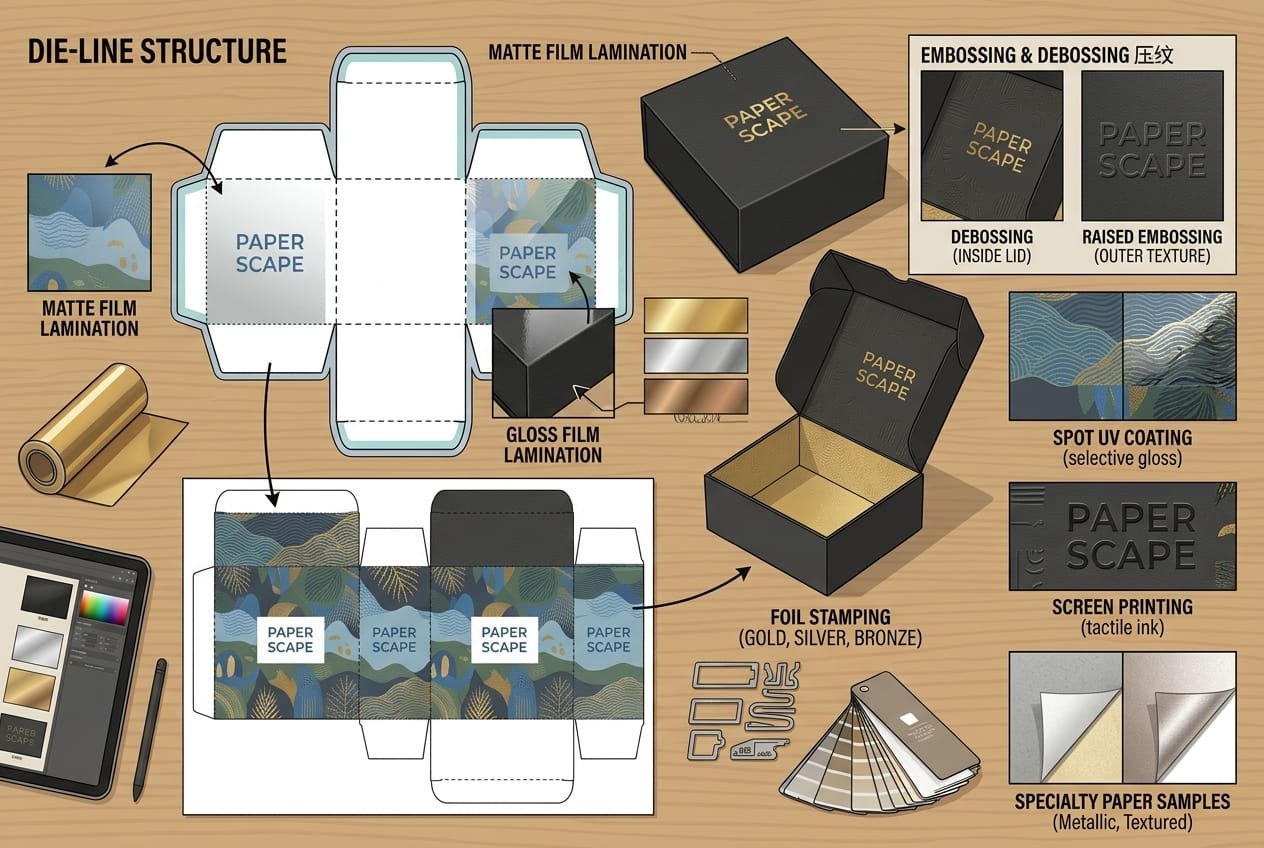
Not every packaging project needs multiple finishing effects. A suitable combination should be selected according to the artwork, product position, package format, handling requirements and desired presentation.
5. Review a Printed or Finished Sample
A physical sample helps buyers check the result before production. The review should include both visual and practical details.
Buyers can check:
- Color appearance on the selected material
- Logo and text clarity
- Image and pattern placement
- Alignment across panels and folds
- Finish consistency and surface appearance
- Barcode or product information visibility
- Compatibility between finishing and package assembly
- Opening, handling and overall presentation
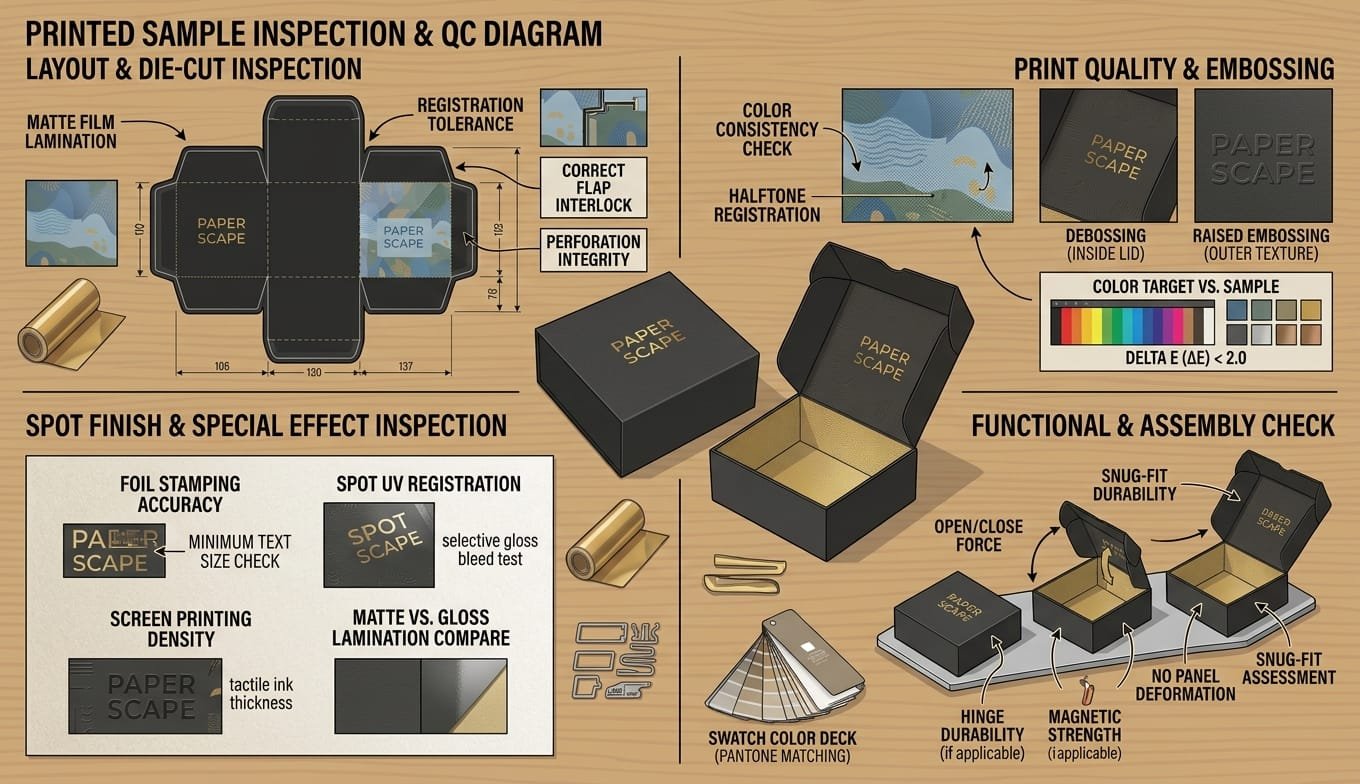
If the sample reveals a color, alignment or finishing issue, the artwork or production specification can be discussed before the final order is confirmed.
6. Confirm the Final Production Specification
After the artwork, material, printing and finishing are reviewed, the approved information can be organized into a final production specification.
The specification may include:
- Final artwork and dieline
- Packaging material
- Printing direction
- Color requirements
- Finishing requirements
- Insert, window or accessory details
- Quantity and packing requirements
- Delivery information
A clear specification helps reduce confusion between the design file, physical sample and final production requirements.
How Should Buyers Choose Printing and Finishing Options?
The right option depends on the product and packaging purpose. Buyers can consider the following questions:
- Does the package need strong image detail or simple brand information?
- Will the artwork be printed on paperboard, corrugated material or another surface?
- Does the brand need a soft, reflective, textured or premium appearance?
- Will the package be folded, assembled, stacked or transported?
- Are the logo, barcode and product details easy to read?
- Does the finishing remain practical after folding and assembly?
- Does the selected finish support the target cost and production requirements?
A premium appearance should not be evaluated only from a digital mock-up. The actual material, printing and finish can change how the colors, texture and details appear on the finished package.
What Information Should Buyers Prepare?
To make the printing and finishing discussion more efficient, buyers can prepare:
- Final or draft artwork files
- Logo and brand guidelines
- Preferred colors or color references
- Product information and barcode files when required
- Packaging structure or dieline
- Product photos and packaging references
- Preferred material and surface appearance
- Finishing references such as matte, gloss, foil or embossing
- Expected quantity
- Target market, delivery destination and timing requirements
Reference images are useful for communicating visual direction, but the final printing and finishing recommendation should be based on the actual artwork, material, structure and project requirements.
Frequently Asked Questions About Printing and Finishing
What is the difference between printing and finishing?
Printing applies the artwork, colors, images, logo and product information to the packaging material. Finishing adds or changes the surface appearance, texture or decorative details after or alongside the printing process.
Can printing and finishing be discussed before the packaging structure is complete?
An initial direction can be discussed early, but the final recommendation should be checked against the confirmed structure, material, dieline, folds, cut lines and production requirements.
Can packaging include both printing and special finishing?
Yes. A project may combine printed artwork with selected surface or decorative effects. The suitable combination depends on the material, structure, artwork, handling and production requirements.
How can buyers check the printing result before production?
A printed or finished sample can help buyers review color appearance, artwork alignment, text clarity, material appearance, surface finish and practical assembly before the final production specification is approved.
What artwork files should I provide?
Provide the logo, artwork layout, brand guidelines, product information, color references, packaging structure or dieline and any reference images. If a barcode or regulated product information is required, the responsible brand or retailer should approve the final data.
Can printing and finishing support mass production?
Yes. Once the artwork, material, printing, finishing, quantity and packing requirements are confirmed, the information can be organized for production discussion.
Discuss Your Printing and Finishing Project
Share your artwork, packaging structure, material preferences and finishing references with PAPER SCAPE GROUP. The team can discuss a suitable printing and finishing direction for your custom paper packaging project.