
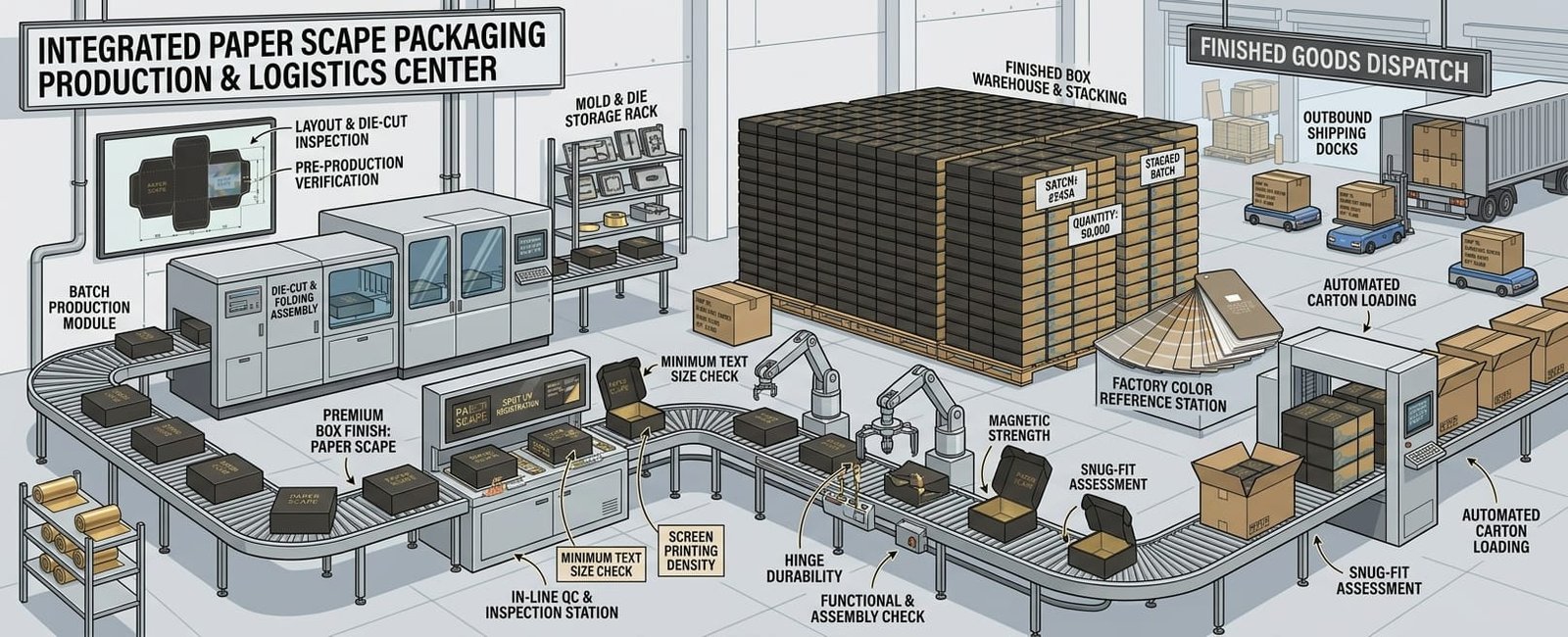
Mass Production for Custom Paper Packaging
Mass production is the stage where an approved packaging design, sample and production specification are prepared for a repeatable packaging order. For custom paper packaging, this stage connects the confirmed structure, artwork, materials, printing, finishing, quantity, packing and delivery requirements.
Paper Scape Group supports custom paper packaging projects from design and prototype sampling through production preparation. The company presents stable factory production, complete custom packaging service and direct factory support as part of its packaging service offering.
What Does Mass Production for Paper Packaging Include?
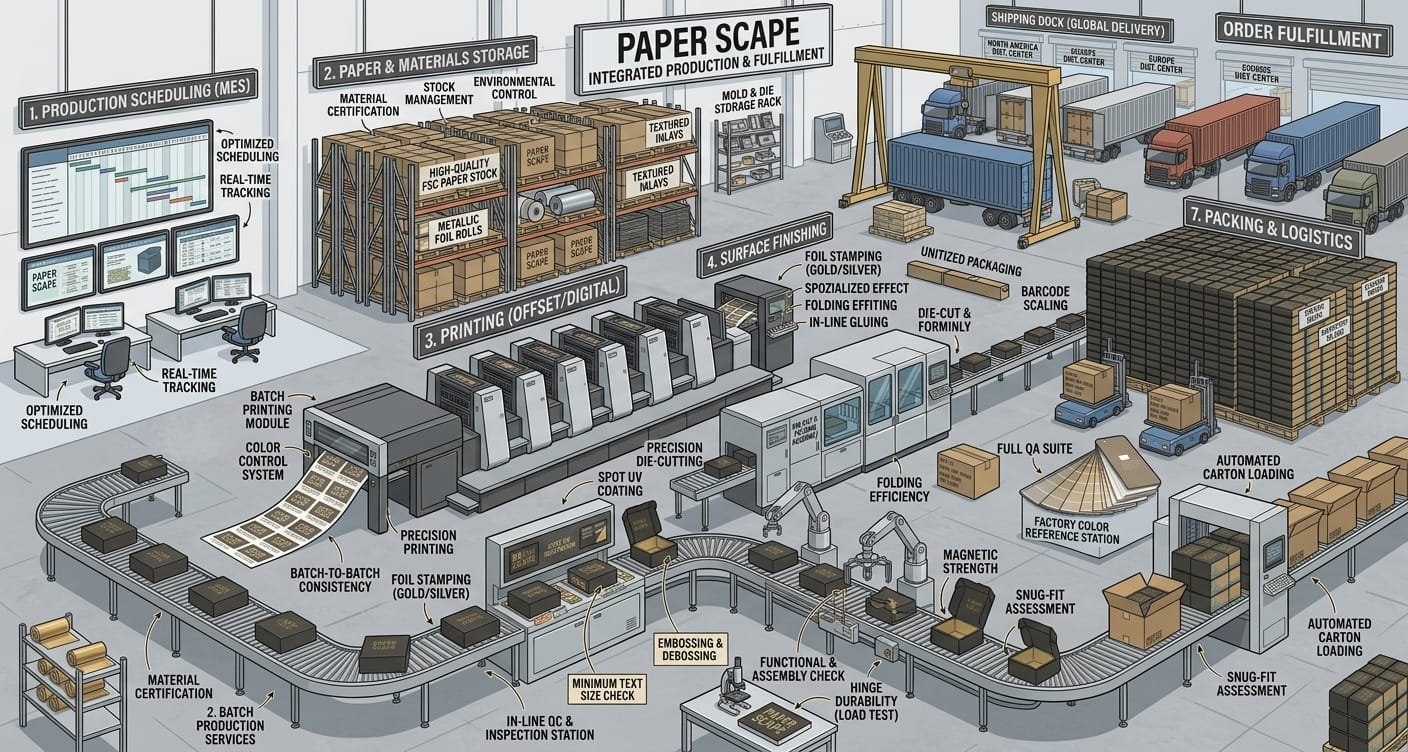
Mass production preparation may include the following project information:
- Approved packaging structure and dimensions
- Final artwork and dieline
- Paperboard or corrugated material
- Printing direction and color requirements
- Surface finishing requirements
- Inserts, windows, handles or other accessories
- Quantity and packing requirements
- Delivery destination and timing requirements
The production stage should begin after the design and prototype have been reviewed. A clear specification helps the buyer and packaging team work from the same approved reference.
This preparation also gives the buyer an opportunity to separate confirmed decisions from open questions. For example, the structure may already be approved while the final surface finish or packing method still needs discussion. Recording those items before production helps the team avoid treating an earlier draft as the final instruction.
Mass production is not simply a larger version of sampling. The physical sample helps confirm the design, while the production specification organizes the details needed for a repeatable order.
When Is a Packaging Project Ready for Mass Production?
A project is more prepared for production when the key packaging decisions have been reviewed and confirmed. Buyers should check whether the following items are available:
- Product dimensions and packaging fit
- Packaging format and structural details
- Approved artwork and panel layout
- Confirmed material direction
- Printing and finishing requirements
- Insert or accessory details
- Quantity and packing requirements
- Delivery information
Prototype sampling can help reveal problems with dimensions, opening methods, artwork placement, material appearance or finishing. If changes are identified, they should be addressed before the production specification is treated as final.
The buyer should also confirm who approves the artwork, sample and final specification, so feedback is not collected from conflicting versions. Product fit, package format, material direction and finishing should be reviewed together because a change to one element can affect the others.
The exact readiness requirements depend on the packaging format and project complexity. A simple folding box and a package with multiple inserts or special finishing may require different review points. The objective is not to complete an unnecessary checklist, but to ensure that the details needed for the specific order are clear.
How Does the Mass Production Preparation Process Work?
1. Confirm the Production Specification
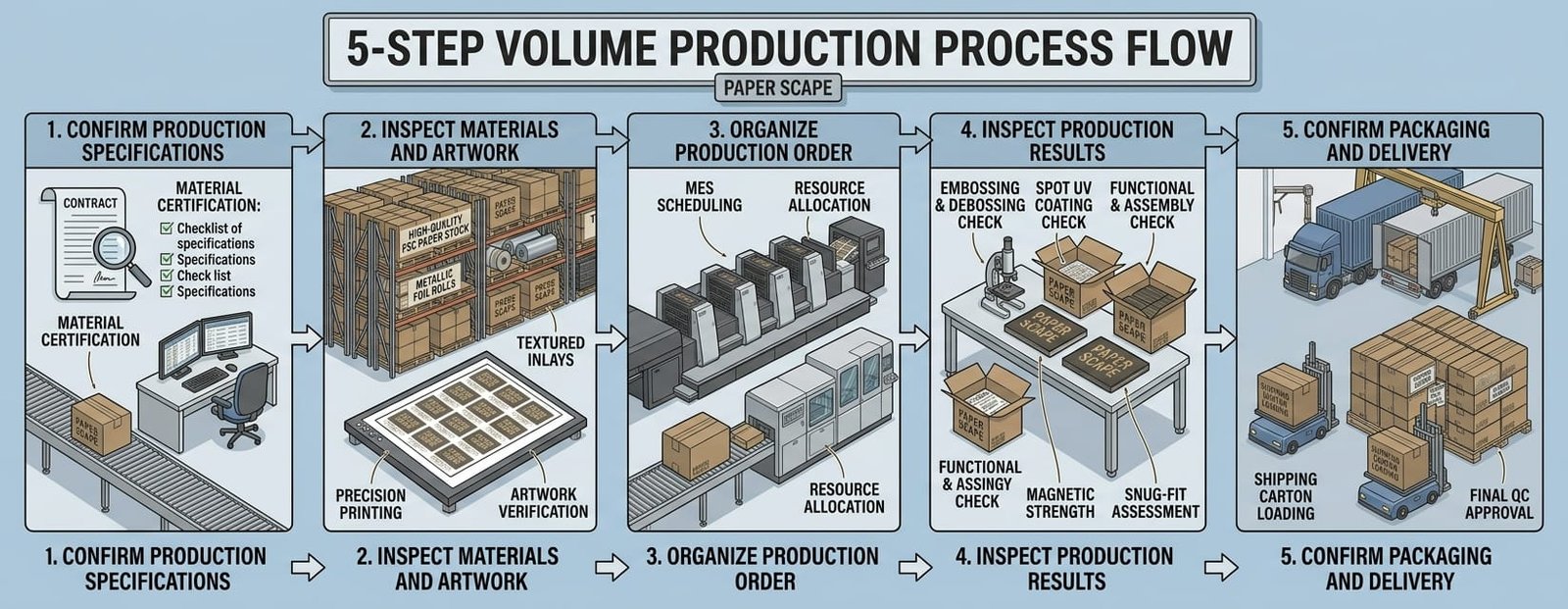
The first step is to organize the approved packaging information. This can include the final artwork, packaging structure, materials, finishing, quantity, packing requirements and delivery details.
The specification should make clear which version of the artwork and sample has been approved. It should also identify any details that still require confirmation before the order moves forward.
A clear production reference reduces the risk of using an outdated artwork file, incorrect dimensions or an unapproved material direction.
2. Check Materials, Artwork and Finishing
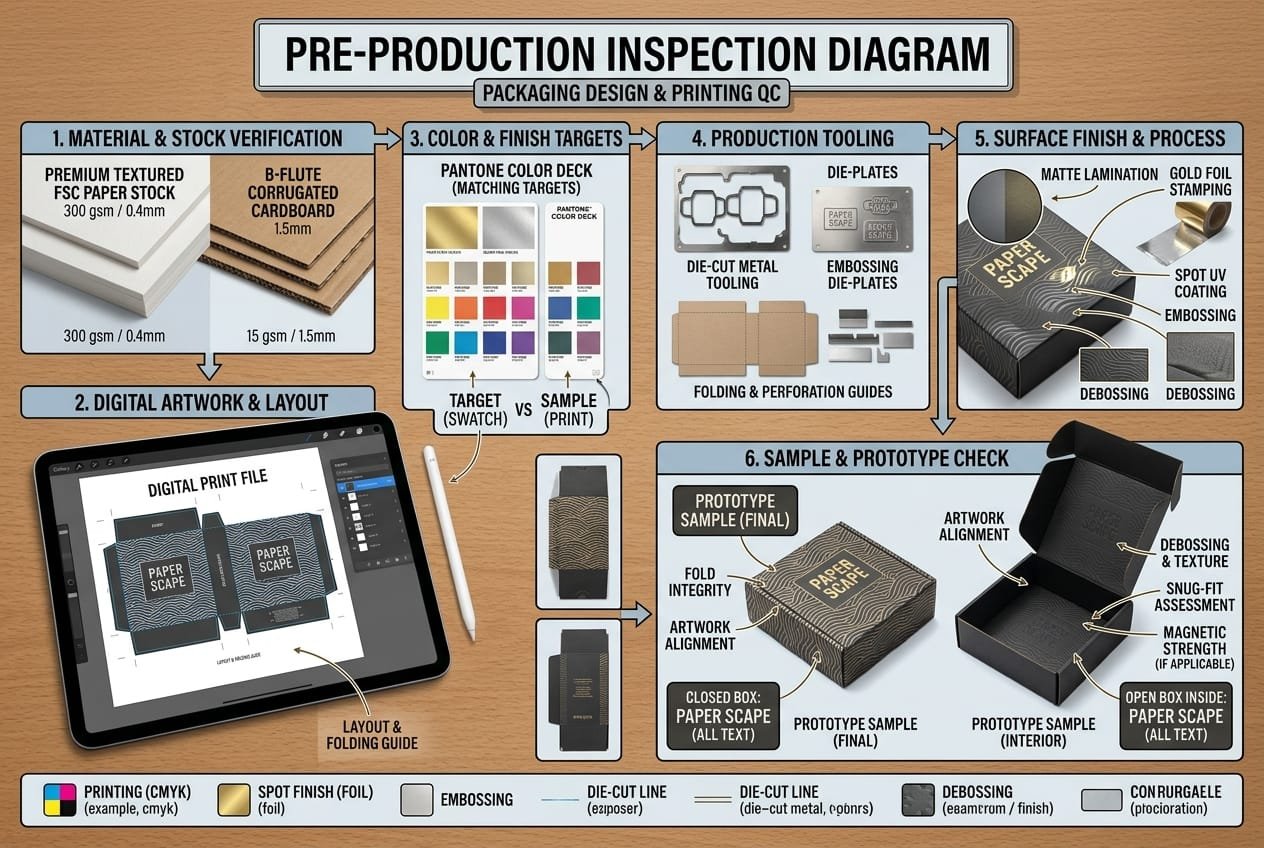
The packaging team and buyer should review the materials, artwork, printing direction and finishing requirements together. Paperboard and corrugated packaging may have different structural and surface considerations.
The review can include:
- Material type and thickness direction
- Artwork version and dieline
- Color and printing requirements
- Matte, gloss, foil, embossing or other finish direction
- Insert, window, handle or accessory details
- Folding, assembly and packing requirements
These details should match the approved prototype and the buyer’s project brief. If the material or finishing direction changes, the production specification may need to be reviewed again.
3. Organize the Production Order
Before production starts, the order information should be organized around the confirmed quantity, packaging format and delivery requirements. The buyer should know which products are included, how the packaging will be packed and where it will be delivered.
This stage may also clarify whether the package will be supplied flat, folded, assembled or packed with inserts and accessories. The handling method can affect storage, transport and the final preparation of the order.
The goal is to make the order details clear before the production run begins, rather than solving basic specification questions after production has started.
4. Review Production Results
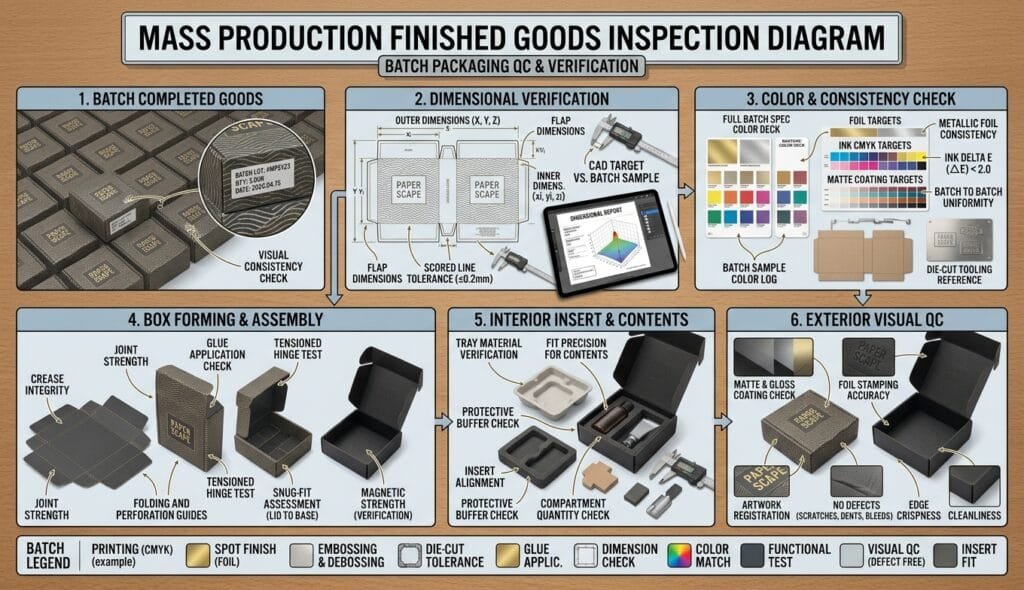
During a production project, buyers may need to review the result against the approved sample and specification. The review can focus on the appearance, structure and practical use of the finished packaging.
Relevant checks may include:
- Product fit and package dimensions
- Folding, opening and closing performance
- Artwork and color appearance
- Printing clarity and panel alignment
- Surface finish consistency
- Insert or accessory position
- Assembly and packing condition
The appropriate review method depends on the project arrangement and the information agreed before production. Any issue should be described clearly by identifying the affected panel, material, finishing detail or packaging component.
5. Confirm Packing and Delivery Details
The final stage of the production discussion includes packing and delivery information. Buyers should confirm how the packaging will be packed, whether it will be supplied flat or assembled and which delivery destination applies to the order.
The delivery discussion may also include the required timing, shipping information and documents needed for the project. These details should be recorded together with the approved production specification.
Paper Scape Group’s website describes its service as supporting packaging projects from design to finished products. The final arrangement still depends on the confirmed project information, order requirements and delivery conditions.
What Can Buyers Check Before Approving a Production Order?
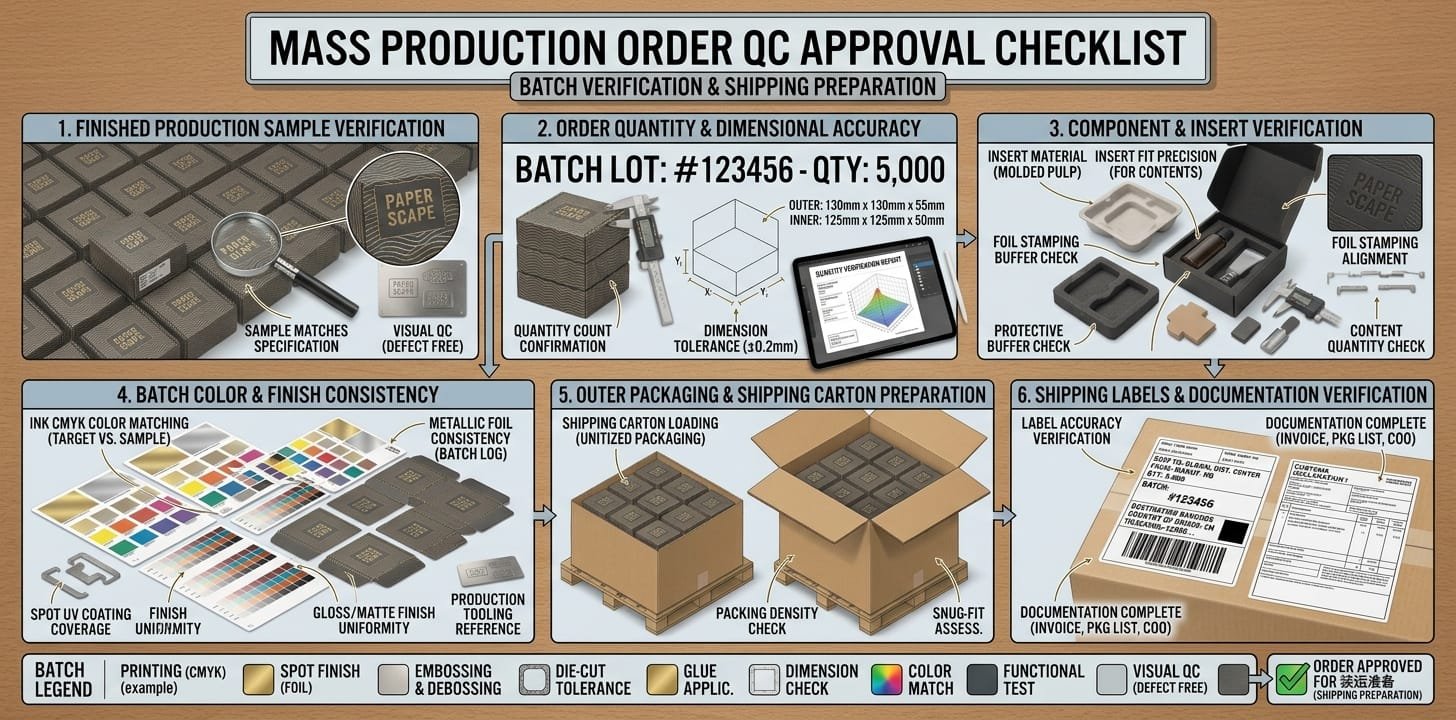
Before approving a mass production order, buyers can use the following checklist:
- Is the product fit correct?
- Are the external and internal dimensions approved?
- Is the packaging format correct?
- Is the latest artwork file being used?
- Are logos, text, barcodes and product details clear?
- Are printing colors and finishing requirements confirmed?
- Are inserts, windows, handles or accessories included correctly?
- Is the quantity confirmed?
- Are packing and delivery details clear?
- Has the prototype or approved reference been reviewed?
This checklist does not replace the project specification. It helps buyers identify missing information before the production order is confirmed.
It can also help organize the final approval discussion. If a buyer cannot answer one of these questions yet, that item can be marked as open rather than assumed. This is particularly useful when several people are reviewing artwork, product details, packing instructions or delivery information. A short written record of the approved reference can make later production communication more consistent.
How Does Mass Production Connect to Other Packaging Services?
Mass production is connected to the earlier stages of a custom packaging project.
Custom Packaging Design establishes the visual direction, box format and project requirements. Structural Packaging Design develops the package shape, dimensions, internal fit and opening method. Prototype Sampling provides a physical sample for checking the structure, artwork, materials and finishing. Printing and Finishing define how the approved design appears on the final material.
Mass production brings these approved decisions together for the production order. Keeping the information consistent across each stage can reduce misunderstandings and unnecessary revisions. If one of these earlier stages changes after approval, the production reference should be updated so the order is not based on mixed versions.
This service-page structure also helps buyers understand where a question belongs. A box-format question relates to structural design, a physical review relates to prototype sampling, and artwork or surface-effect questions relate to printing and finishing. The production stage then uses the confirmed answers to prepare the order.
What Information Should Buyers Prepare?
To discuss a mass production packaging project, buyers can prepare:
- Product dimensions, weight and photos
- Approved packaging structure or prototype
- Final artwork and dieline
- Material and finishing preferences
- Printing and color requirements
- Insert, window or accessory details
- Expected quantity
- Packing requirements
- Delivery destination and timing requirements
- Reference files from earlier design or sampling discussions
If the artwork, structure or material is still being revised, it is better to identify the open items before confirming the production specification.
The preparation list can be adapted to the project. A buyer may not have every file at the beginning, but should clearly identify which information is confirmed and which information remains under review. This makes the next discussion more efficient and helps prevent a quotation, sample or production order from being based on incomplete instructions. It also gives the production team a clearer basis for checking later revisions.
Frequently Asked Questions About Mass Production
What is mass production in custom packaging?
Mass production is the stage where an approved packaging design and specification are produced as a repeatable order. It follows the review of the structure, artwork, materials, finishing, quantity and delivery requirements.
Should I complete a prototype before mass production?
A prototype is useful for checking product fit, dimensions, opening method, artwork placement, materials and finishing before the production specification is confirmed. The appropriate sample scope depends on the packaging project.
What information is needed before production starts?
The main information includes the approved structure, final artwork, materials, printing, finishing, quantity, packing requirements, delivery destination and timing requirements.
Can mass production include printing and finishing?
Yes. Printing and finishing can form part of the production specification. The exact direction should be confirmed according to the approved artwork, material, packaging structure and project requirements.
How can buyers reduce production mistakes?
Use one approved production specification, confirm the latest artwork and sample, review the material and finishing direction, and record the quantity, packing and delivery details before the order is confirmed.
Can PAPER SCAPE GROUP support packaging from design to production?
Paper Scape Group presents a complete custom packaging service covering design, prototype sampling, printing, finishing and production preparation. The final production arrangement depends on the confirmed packaging requirements and order details.
Discuss Your Mass Production Project
Share your approved packaging design, prototype information, artwork, material requirements and order details with PAPER SCAPE GROUP. The team can discuss the production preparation and packaging requirements for your project.