
Prototype Sampling for Custom Paper Packaging
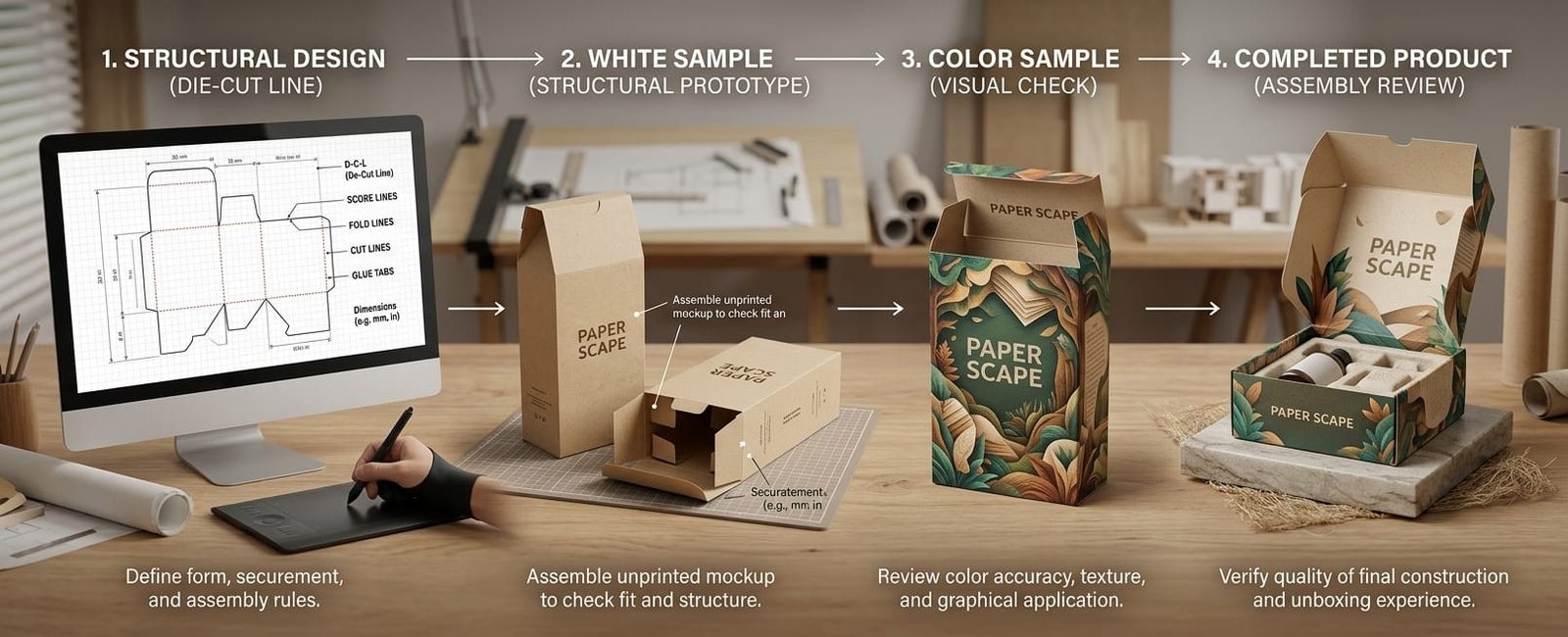
Prototype sampling creates a physical version of a custom package before mass production. It allows buyers to check the box size, structure, product fit, opening method, artwork placement, materials and finishing in a real sample rather than relying only on a drawing or digital mock-up.
For custom gift boxes and paper packaging, prototype sampling helps connect design decisions with production requirements. PAPER SCAPE GROUP supports prototype sampling as part of its custom packaging process, helping brands and business buyers review packaging details before confirming the final production specification.
What Is Prototype Sampling?
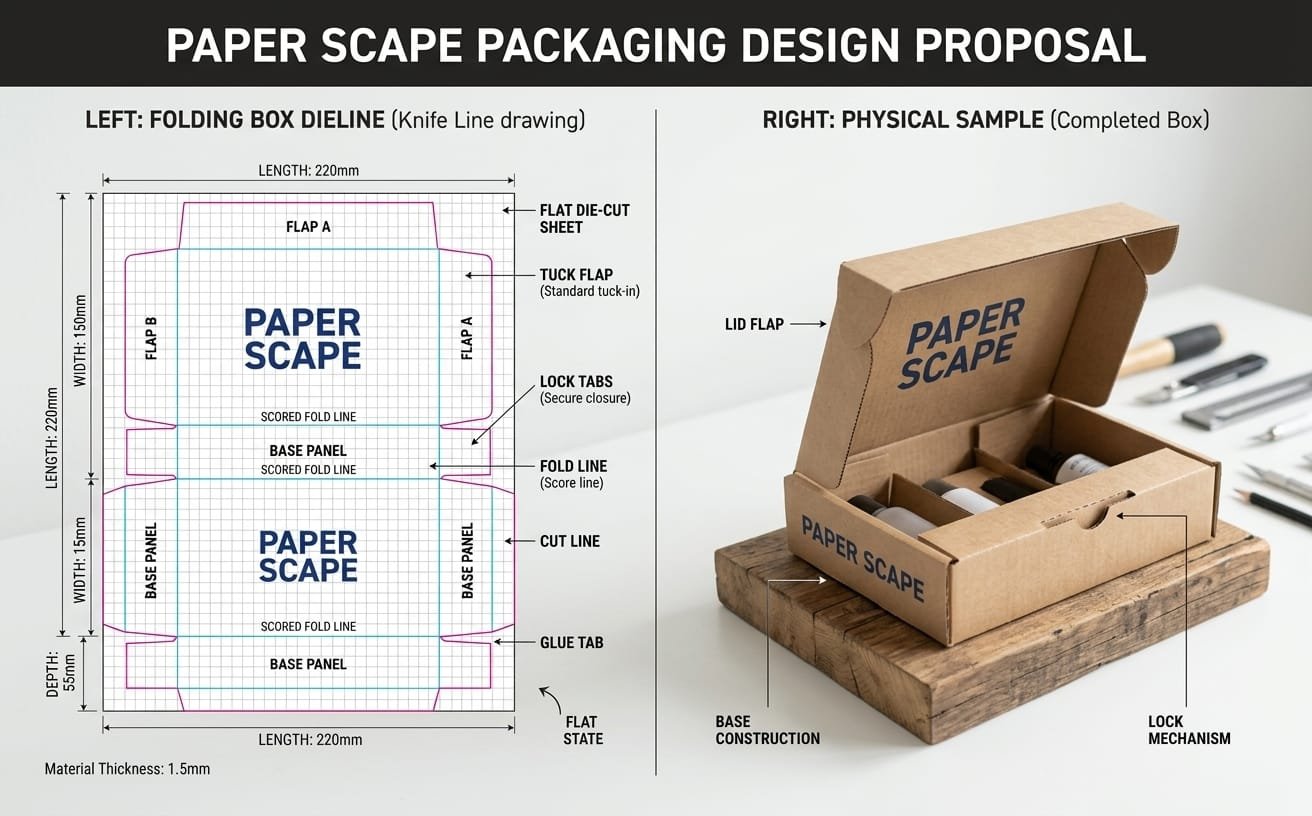
Prototype sampling is the process of making a project-specific packaging sample for review before production. The sample may represent the proposed box structure, dimensions, material, printing, surface finishing, insert or opening method.
A prototype does not simply show what the packaging looks like. It helps the buyer understand how the package works in practice. The sample can reveal whether the product fits correctly, whether the lid or drawer moves as expected, whether the structure is easy to assemble and whether the artwork is positioned correctly on the finished package.
The exact sample method depends on the packaging format, project stage, materials and buyer requirements. Some projects may focus first on the structure and dimensions, while others may require a more complete sample with artwork, printing and finishing details.
Why Is Prototype Sampling Important?
A digital design can show the general appearance of a package, but it cannot fully demonstrate the physical opening experience, material feel or assembly process. A prototype gives the buyer an opportunity to review these details before production decisions are finalized.
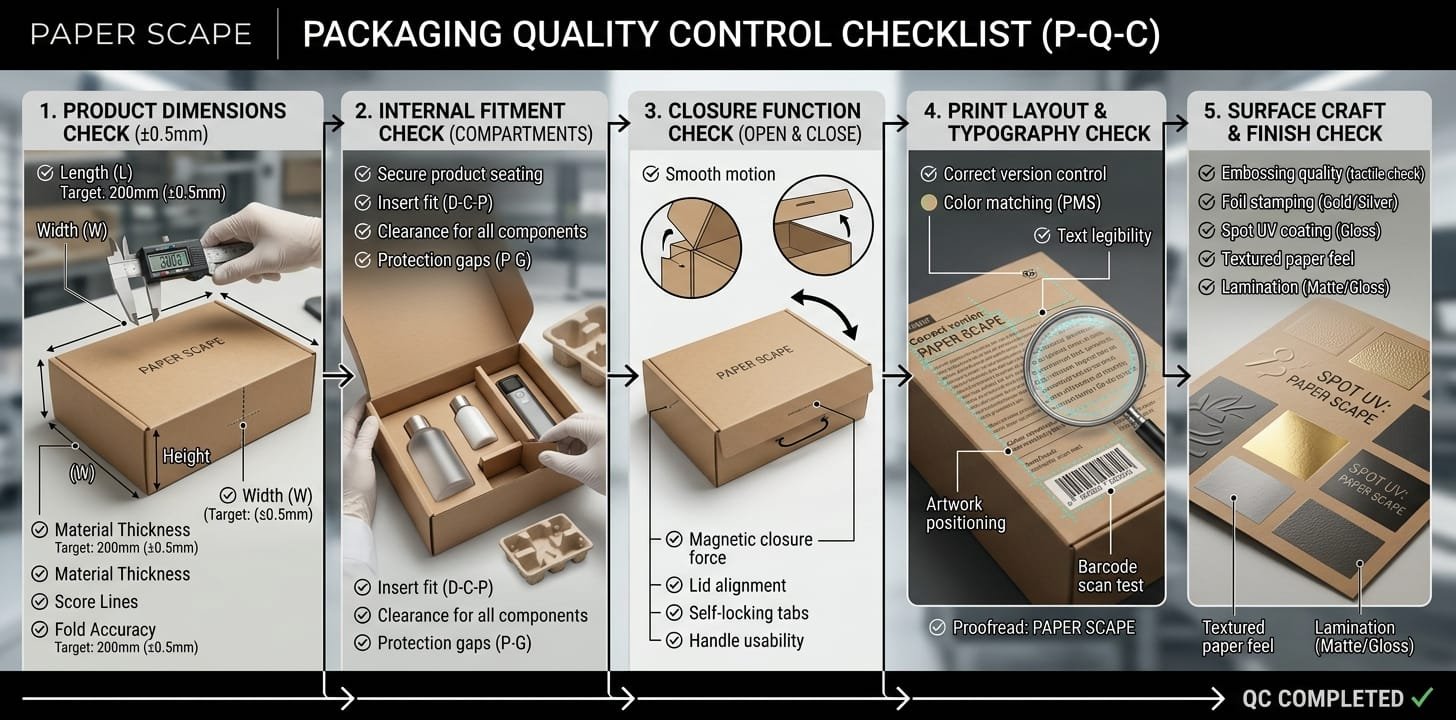
Prototype sampling can help buyers:
- Confirm the product fit and package dimensions
- Check the folding, closing or opening method
- Review inserts, trays, dividers or protective elements
- Evaluate paperboard or corrugated material appearance
- Check artwork placement on different panels
- Review printing and surface finishing
- Identify structural or assembly issues before production
- Communicate clear changes to the packaging team
Sampling can also reduce avoidable revisions. If a problem is found in the physical sample, the structure or artwork can be discussed before the final specification is transferred to production.
How Does the Prototype Sampling Process Work?
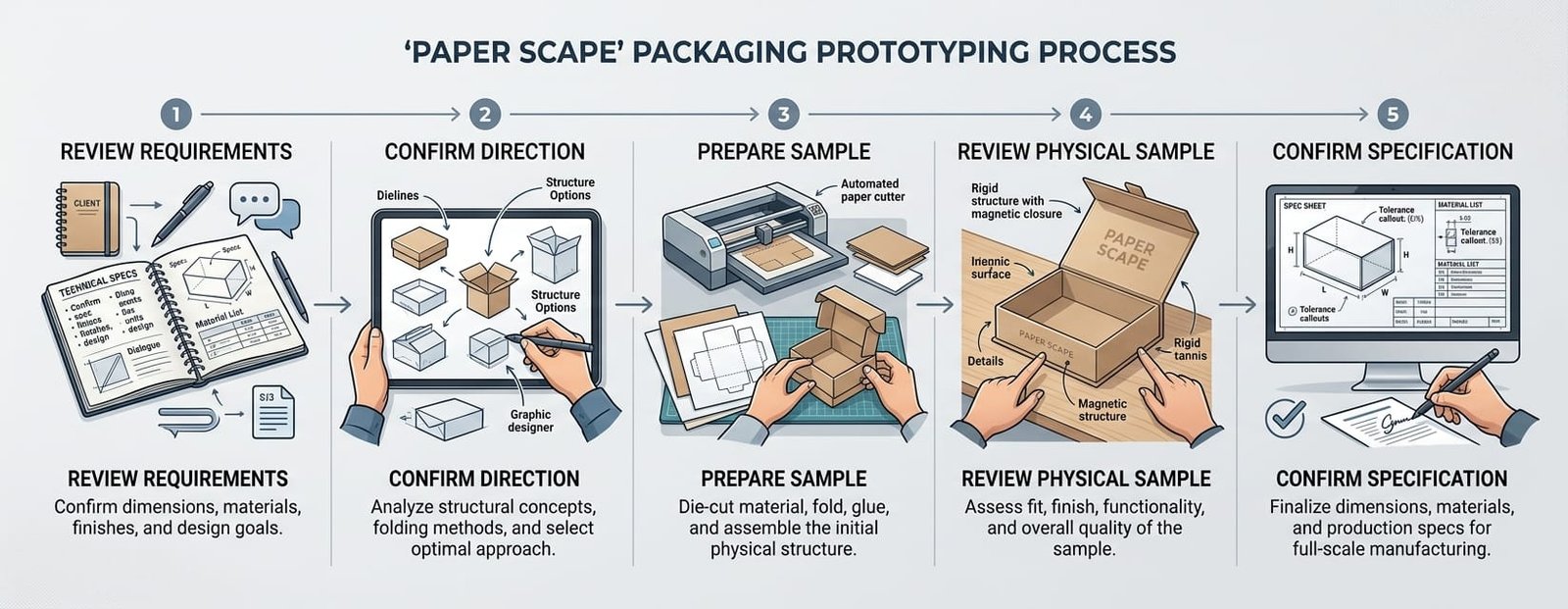
1. Review the Product and Packaging Requirements
The process begins with the product information and the packaging objective. Buyers can provide the product length, width, height and weight, together with product photos, drawings or a physical sample when available.
The discussion may also cover the packaging format, target market, expected quantity, delivery destination, protection requirements and preferred opening experience. These details help the team understand what the sample needs to demonstrate.
2. Confirm the Packaging Direction
Before sampling, the packaging direction should be clear enough to prepare the sample. This may include a folding box, lid-and-base box, drawer box, book-style box, corrugated box or another custom format.
The structure may also include an insert, tray, divider, window, ribbon, magnetic closure or other packaging element. The selected format and components affect the sample dimensions, assembly method and review points.
3. Prepare the Prototype Sample
A structural sample can be useful when the buyer needs to check dimensions, folding, closure or product stability first. A more complete sample can be useful when the buyer also needs to review the visual appearance and material finish before production.
The sample is prepared according to the confirmed structure and available project information. Depending on the project stage, the prototype may focus on the physical shape and product fit, or it may also include artwork, printing and surface finishing.
4. Review the Physical Sample
The buyer should review the prototype from both a design and production perspective. Important checks may include:
- Does the product fit securely inside the package?
- Are the internal dimensions and clearances suitable?
- Does the box open, close, fold or slide correctly?
- Are the insert, tray or divider positioned correctly?
- Is the package practical to assemble and handle?
- Are the logo, artwork and product details aligned with the panels?
- Does the material have the expected appearance and stiffness?
- Do the printing and finishing match the intended direction?
5. Confirm the Revised Specification
After the sample review, the agreed changes can be applied to the packaging structure, artwork, materials or finishing. The approved information should then be organized into a production specification.
The specification may include the final dimensions, packaging structure, material, artwork, printing method, surface finish, insert details, quantity, packing requirements and delivery information. This gives the production discussion a clear reference and reduces confusion between the approved sample and the final order.
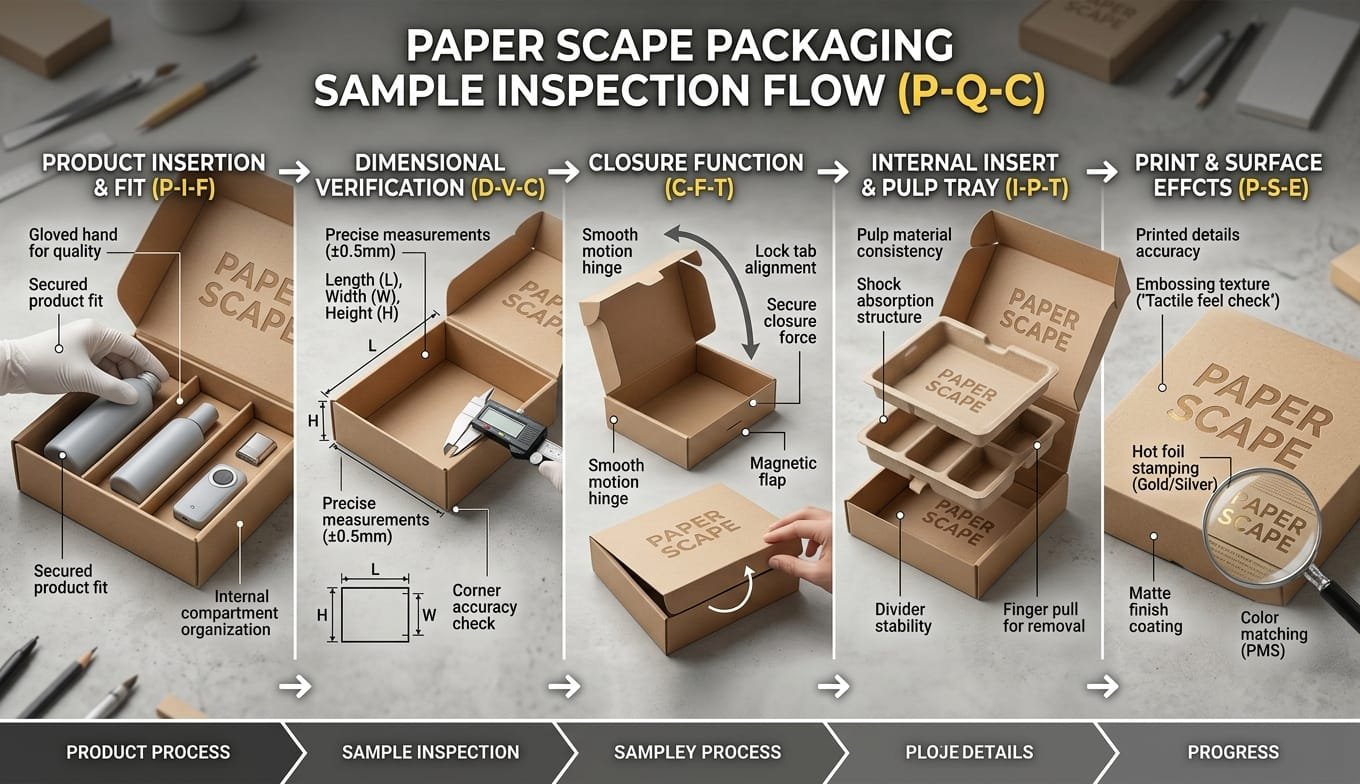
The review should record specific changes rather than general comments such as “make it better.” Clear feedback helps the packaging team understand which dimensions, panels, materials or finishing details need adjustment.
What Can a Packaging Prototype Help You Check?
A prototype sample can be used to check several parts of a custom paper packaging project at the same time.
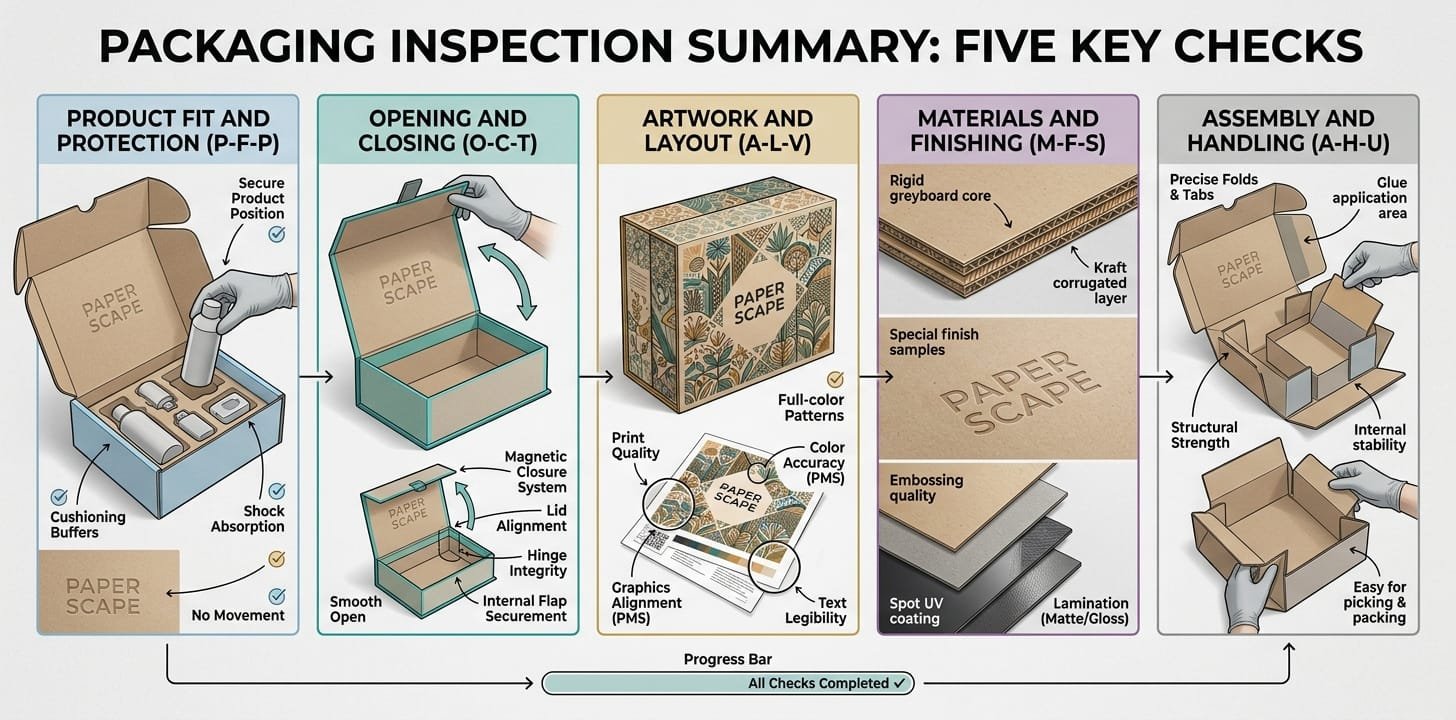
Product Fit and Protection
The product should fit the package without unnecessary movement. If the product is fragile, has an unusual shape or needs additional protection, the buyer can review whether an insert, divider, tray or wrapping material is suitable.
Opening and Closing Experience
The sample can show how the customer will open, close, slide, fold or carry the package. This is especially important for drawer boxes, book-style boxes, lid-and-base boxes and packages with special closures.
Artwork and Panel Layout
The physical sample helps the buyer see how the artwork appears across the front, sides, back, interior panels, folds and closures. It can reveal alignment or spacing issues that are not obvious in a flat digital file.
Materials and Finishing
The buyer can review the appearance and feel of the paperboard, corrugated material, printing and surface finish. The final material direction should be confirmed according to the product, packaging format and production requirements.
Assembly and Handling
A prototype can help identify whether the package is practical to fold, assemble, fill, store and transport. This is useful when the packaging will be assembled manually or when the structure must be repeated consistently in production.
What Information Should Buyers Prepare?
To make prototype sampling more efficient, buyers can prepare:
- Product dimensions and weight
- Product photos, drawings or physical samples
- Packaging format preferences or reference images
- Product protection requirements
- Expected quantity
- Logo and artwork files
- Preferred materials and finishes
- Insert, divider or accessory requirements
- Target market and packaging purpose
- Delivery destination and timing requirements
Reference packaging can help communicate the desired direction, but it should not replace the actual product dimensions. The more accurate the product information, the more useful the prototype review will be.
Frequently Asked Questions About Prototype Sampling
What is the difference between a prototype sample and a production sample?
A prototype sample is used to review the structure, dimensions, fit, appearance and practical operation before production. A production sample is normally used to confirm the final production result after the materials, artwork and specifications have been established. The exact sample stages depend on the project requirements.
Is prototype sampling necessary for every packaging project?
A prototype is particularly useful when the package has a custom structure, insert, special opening method, unusual product shape or detailed finishing. The buyer and packaging partner can discuss the appropriate sample scope according to the project complexity.
Can a prototype include printing and finishing?
Yes. Depending on the project stage, the prototype may focus on the structure and fit, or it may also include artwork, printing, material appearance and surface finishing for a more complete review.
What should I check when I receive the packaging prototype?
Check the product fit, dimensions, opening and closing method, assembly, insert position, artwork alignment, material appearance, printing and finishing. Record specific changes and identify which part of the sample each comment refers to.
Can prototype sampling support mass production?
Yes. The approved prototype can help establish the final structure and production specification. Mass-production preparation still depends on the confirmed artwork, materials, finishing, quantity, packing requirements and delivery details.
Discuss Your Prototype Sampling Project
Share your product details, packaging requirements and reference materials with PAPER SCAPE GROUP. The team can discuss a suitable prototype sampling direction and help organize the packaging information needed for the next production discussion.